
How to Buy Solar Panels in the USA?
Buying solar panels in the USA requires more than comparing prices on a website. Your roof, local climate, electricity use, and utility rules all affect the final decision. A sunny roof may still perform poorly if trees shade it during peak hours. An older roof may also need repairs before installation. Small details can change the project cost.
This guide explains how to research solar panels usa options with practical care. Start by reviewing twelve months of electricity bills. Then estimate your future energy needs, especially if you plan to buy an electric vehicle. Request at least three written quotes from qualified installers. Each quote should explain panel output, inverter type, labor, permits, monitoring, warranties, and expected annual production. Do not accept vague promises. Ask for equipment datasheets and realistic performance estimates.
Check whether the installer holds relevant certifications and has experience in your area. Local weather matters. Snow, hurricanes, high winds, and extreme heat can influence equipment selection. Confirm how your utility handles interconnection and excess electricity. Tax credits and local incentives may change, so verify current details through official government or utility sources. The lowest price is not always the best value. Sometimes, it hides weaker warranties or limited service.
Keep your records. Save contracts, inspection documents, and warranty terms. Solar can reduce long-term electricity costs, but savings are not guaranteed. Financing interest, maintenance, roof replacement, and changing utility rates deserve honest attention. A careful purchase may feel slower. That is usually safer. Mistakes are expensive, and a little skepticism can protect your investment.
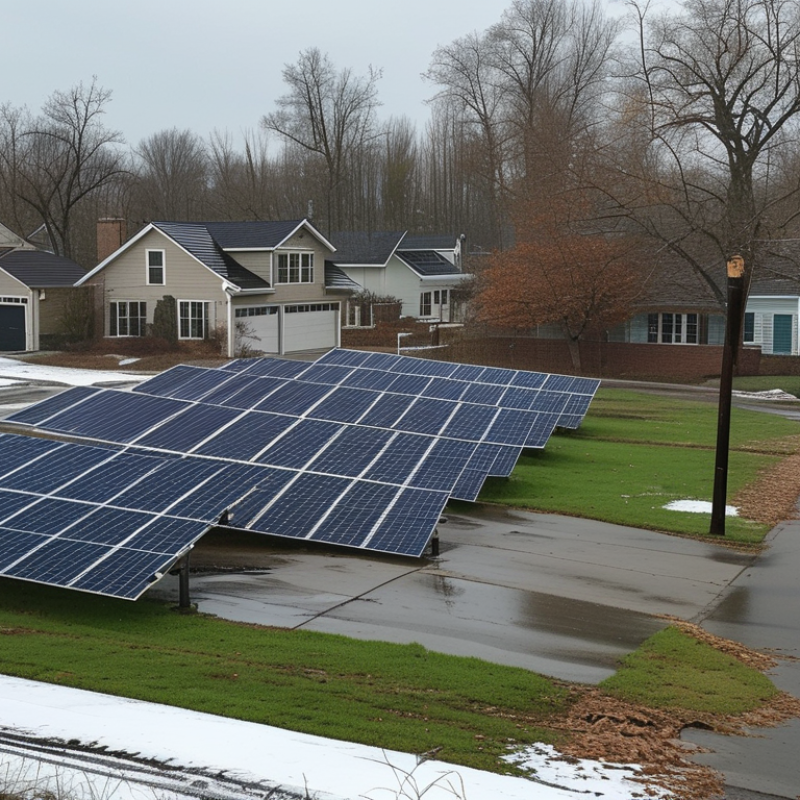
Assess U.S. Solar Potential and Electricity Use Before Choosing a System
How to Buy Solar Panels in the USA?
Before choosing a system, measure your home’s solar potential. A south-facing roof often receives strong sunlight, but direction is not everything. Roof pitch, nearby trees, chimneys, and seasonal shadows can reduce production. A winter shadow may matter more than a summer glance. Use a recent satellite assessment and compare it with an on-site inspection by a qualified professional. Weather also varies widely across the United States, so a sunny state does not guarantee equal output on every roof.
Your electricity use matters just as much. Collect twelve months of utility bills, including summer and winter peaks. Note air-conditioning, heating, electric vehicles, and future renovations. A larger system is not always better. Oversizing can increase costs, while undersizing may leave you buying substantial grid electricity. Review the utility’s rate structure, export rules, and connection requirements before signing anything. These policies can change, so verify them directly with the utility.
Tips: Write down your average monthly kilowatt-hours. Mark shade on the roof at different times. Ask for estimated annual production, equipment warranties, maintenance needs, and degradation assumptions. Request calculations in writing. They may be imperfect. Solar estimates depend on weather, roof condition, and household habits. If your bills are unusually high, investigate insulation or inefficient appliances first. A panel system cannot correct every energy problem.
| Planning Dimension | U.S. Reference Data | What It Means for System Selection | Recommended Action |
|---|---|---|---|
| 1. Assess Your Electricity Use | |||
| Average U.S. residential electricity consumption | Approximately 10,791 kWh per household per year, or about 899 kWh per month, based on 2022 national residential data. | This is a national average only. Household size, heating, cooling, water heating, and electric vehicles can substantially change the required solar capacity. | Use the last 12 months of utility bills rather than the national average when calculating system size. |
| Annual electricity demand calculation | Annual demand = sum of monthly kWh usage | Annual usage provides the baseline for estimating how much electricity the solar array should generate. | Separate unusually high or low months and identify planned loads such as an electric vehicle, heat pump, or battery. |
| Future electricity demand | Common new loads include electric vehicles, heat pumps, induction cooking, electric water heaters, and pool equipment. | A system sized only for current consumption may produce less than the household needs after electrification. | Add a documented estimate for future loads before requesting system proposals. |
| 2. Compare Solar Potential by Location | |||
| Northeast and northern coastal areas | Typical annual equivalent full-sun resource: approximately 3.5–4.5 peak-sun-hours per day. | Solar can work well, but a larger roof area may be needed for the same annual output compared with the Southwest. | Prioritize an unshaded roof, efficient space use, and a production estimate based on the exact address. |
| Midwest and central regions | Typical annual equivalent full-sun resource: approximately 4.0–5.0 peak-sun-hours per day. | Seasonal variation can be significant, with lower production during winter and higher production during summer. | Review month-by-month production, especially if winter electricity consumption is high. |
| Southeast and Gulf Coast areas | Typical annual equivalent full-sun resource: approximately 4.5–5.5 peak-sun-hours per day. | Good solar availability may be offset by roof shading, humidity, storms, and high air-conditioning demand. | Check shade throughout the year and use a production model that accounts for local weather conditions. |
| Mountain and Southwest regions | Typical annual equivalent full-sun resource: approximately 5.0–6.5 peak-sun-hours per day. | High solar resource can produce strong annual output from a relatively compact system. | Check high-temperature performance, snow conditions at higher elevations, and local utility export rules. |
| Peak-sun-hour definition | One peak-sun-hour equals solar irradiance of 1,000 watts per square meter received for one hour. It is not the same as the number of daylight hours. | Peak-sun-hours are used to estimate potential photovoltaic production at a location. | Use a recognized address-based solar calculator for the final estimate instead of relying on a regional range. |
| 3. Estimate Required Solar Capacity | |||
| Basic system-size formula | System size (kW) = annual electricity use (kWh) ÷ annual production per kW | Annual production per installed kW varies with location, orientation, tilt, shading, equipment losses, and weather. | Request a production estimate showing annual and monthly kWh, not only the system’s nameplate capacity. |
| Illustrative 6-kW system output | Using an illustrative production range of 1,200–1,700 kWh per installed kW per year, a 6-kW system may generate approximately 7,200–10,200 kWh per year. | This range is a planning illustration, not a site-specific guarantee. Actual output may be lower or higher. | Compare the modeled output with the household’s annual usage and verify the assumptions used in the model. |
| Production losses | Real systems experience losses from inverter conversion, wiring, soiling, module temperature, mismatch, snow, and shading. | The array’s rated capacity is not equal to the electricity delivered to the home over a year. | Ask for the model’s total loss assumptions and whether shading and temperature effects are included. |
| 4. Evaluate the Roof and Property | |||
| Roof orientation | In the Northern Hemisphere, south-facing surfaces generally receive strong annual solar exposure. East- and west-facing surfaces can also be productive. | Orientation affects the timing and amount of electricity generated, but a non-south-facing roof is not automatically unsuitable. | Compare production estimates for each usable roof plane rather than rejecting a property based only on compass direction. |
| Roof pitch | A moderate roof slope is commonly favorable, while very flat or very steep roofs may require additional mounting considerations. | Roof pitch affects the mounting method, installation cost, and production profile. | Confirm roof structure, age, condition, and replacement plans before installation. |
| Shading | Trees, chimneys, neighboring buildings, utility structures, and roof obstructions can reduce production. Partial shade can affect an entire electrical section depending on system design. | A roof with less total area but better sunlight may outperform a larger shaded roof. | Request a shade analysis covering different times of day and seasons. |
| Available roof area | Typical residential panels are approximately 1.7–2.2 square meters each, depending on their rated size and construction. | A larger energy target may require more panels and more usable roof area. | Reserve space around roof edges, vents, access paths, and required setbacks when estimating panel count. |
| 5. Choose the System Configuration | |||
| Grid-connected system | Remains connected to the utility grid and can send surplus electricity to the grid when permitted by local rules. | Usually offers the simplest design for reducing annual electricity purchases but normally does not provide backup power during an outage without additional equipment. | Review the utility’s interconnection process, export compensation, fixed charges, and time-of-use rates. |
| Solar-plus-storage system | Combines photovoltaic generation with a battery capable of storing electricity for later use. | Can provide backup power for selected loads and increase use of solar electricity at home, but adds cost and design complexity. | Define the critical loads, desired backup duration, battery capacity, and recharge strategy. |
| Battery sizing | Usable battery capacity = essential load power × desired backup hours | Battery size should be based on essential circuits and power requirements, not simply the total household electricity bill. | List refrigerators, medical equipment, communications, heating, cooling, pumps, and lighting that must remain operational. |
| 6. Check Economics and Compliance | |||
| Electricity-rate structure | Utility bills may include energy charges, demand charges, fixed charges, time-of-use prices, and separate export-credit rules. | The financial value of solar depends on when electricity is generated and when the home consumes it. | Use the complete tariff, not only the advertised price per kilowatt-hour, when comparing proposals. |
| Permits and interconnection | Requirements vary by state, municipality, utility service territory, and property type. | Approval timelines and installation costs can differ significantly between locations. | Confirm building permits, electrical permits, utility approval, inspection, and permission to operate before scheduling installation. |
| Federal clean-energy incentive | Under current federal law, eligible residential clean-energy expenditures may qualify for a 30% federal tax credit for qualifying installations placed in service during the applicable credit period. | Eligibility, qualifying costs, tax liability, and future law changes affect the actual benefit. | Verify current requirements with official federal tax guidance or a qualified tax professional before including the credit in the financial calculation. |
| Proposal comparison | Important comparison fields include system size, estimated annual kWh, degradation assumptions, equipment warranties, labor coverage, monitoring, maintenance, financing cost, and total price. | The lowest initial price may not provide the lowest long-term cost or the highest expected production. | Compare at least three itemized proposals using the same annual usage and production assumptions. |
| Data references: U.S. Energy Information Administration, residential electricity consumption data; National Renewable Energy Laboratory, solar resource maps and photovoltaic performance modeling guidance; U.S. Department of Energy, residential solar and storage guidance; Internal Revenue Service, current residential clean-energy tax-credit requirements. Regional solar-resource ranges and example system outputs are planning estimates and should be replaced with an address-specific production model before purchase. | |||
Related Posts
-
What Are the Top Rated Solar Panels?
-
Best Solar Energy Panels for Home Use in 2026?
-
Top 10 Solar Panels in Southern California for Sustainable Energy?
-
Top Ways to Get Free Home Solar Panels for Your House?
-
Why Are Solar Energy Providers Essential for Sustainable Energy Solutions?
-
How to Sign Up for Solar Panel Benefits in 2026?