How to Choose the Best Solar Energy Panels for Home Use?
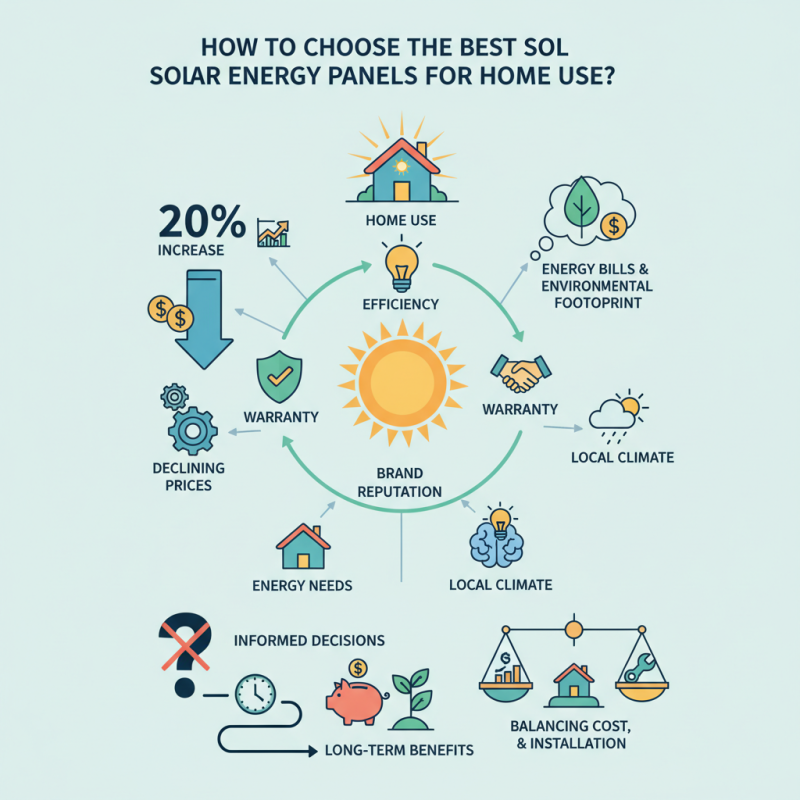
Choosing the right solar energy panels for home use is crucial for maximizing efficiency and savings. Statistics indicate that residential solar installations have seen a 20% increase over the last year. Experts predict continued growth as prices for solar energy panels decline. As John Anderson, a leading expert in renewable energy, states, “Selecting the right solar panels can significantly impact your energy bills and environmental footprint.”
Among the factors to consider are efficiency, warranty, and brand reputation. Homeowners need to carefully evaluate their energy needs and local climate conditions. With various options available, the decision can be overwhelming. Research shows that many consumers regret their choices due to inadequate knowledge.
Yet, with careful consideration, homeowners can make informed decisions. Investing time in understanding solar energy panels for home can lead to long-term benefits. Despite the available options, it’s vital to remember that not every panel suits every home. Balancing cost, performance, and installation aspects requires thought and reflection.
Understanding Solar Energy Panels: Types and Technologies
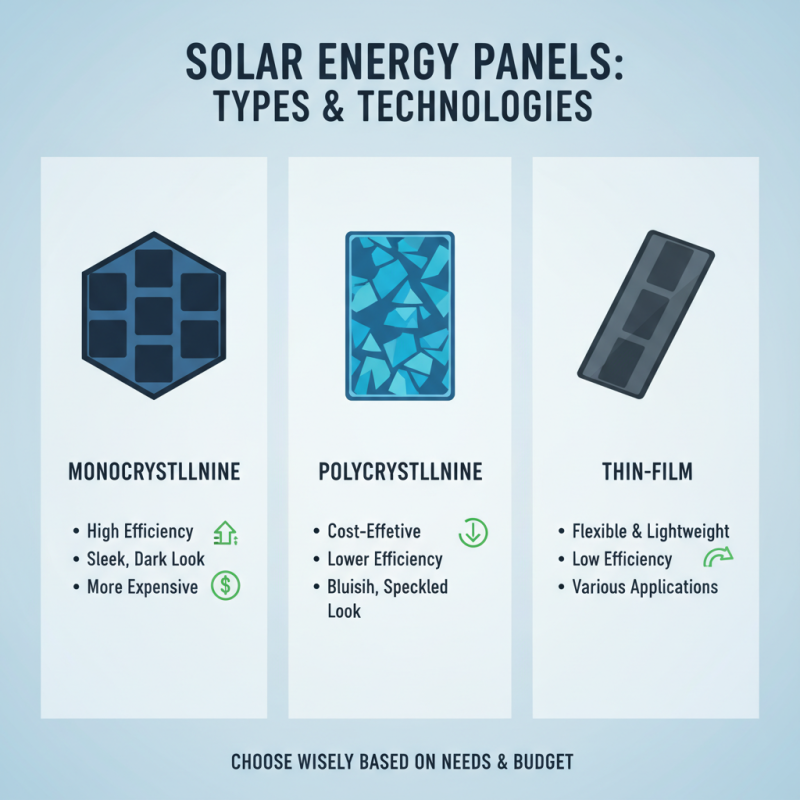
When choosing solar energy panels, understanding their types and technologies is essential. There are primarily three types of solar panels: monocrystalline, polycrystalline, and thin-film. Monocrystalline panels are known for their high efficiency and sleek look. However, they can be more expensive. Polycrystalline panels are a cost-effective choice. But they tend to be less efficient than their monocrystalline counterparts.
Thin-film solar panels are lightweight and flexible. They can be placed on various surfaces, but their efficiency is generally lower. This means that you might need more panels to achieve the same output. It's crucial to consider your specific energy needs when selecting a type. Each technology has its advantages and drawbacks, and these should influence your decision.
Another aspect to consider is the installation process. Some panels are easier to install than others. Complex installations may increase the total cost. Ensure that your roof can support the chosen panels. You may have to reflect on your space and budget as well. Evaluating all these factors thoughtfully can lead to a more informed choice.
Evaluating Solar Panel Efficiency and Performance Ratings
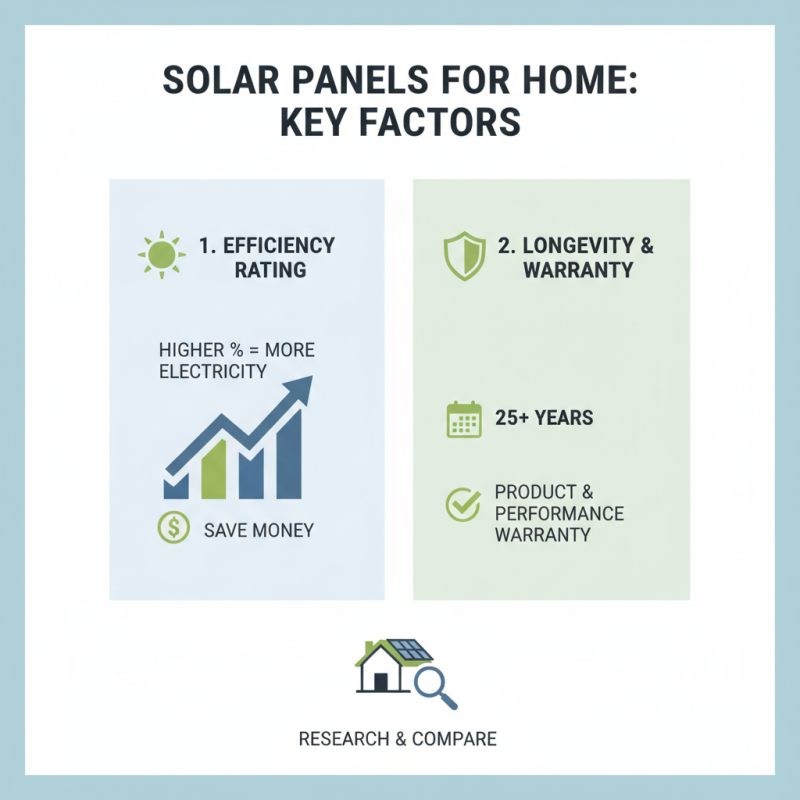
When choosing solar energy panels for home use, efficiency is a key factor. Solar panel efficiency refers to how well a panel converts sunlight into electricity. Reports show that the average efficiency of solar panels ranges from 15% to 22%. Higher efficiency panels can produce more power in a limited space. However, cost often increases with efficiency ratings.
Tips: Consider where you will install your panels. Less efficient panels may suffice for larger roofs. If space is limited, higher efficiency panels could be worth the investment. Assess your energy needs carefully.
Performance ratings are just as crucial. Look at the temperature coefficient. This rating indicates how performance drops as temperatures rise. A lower percentage means better performance on hot days. It’s common for panels to lose 0.5% to 1.0% efficiency per degree Celsius over 25°C.
Tips: Review third-party testing data on panel performance. This information can guide your decision. Check how panels hold up over time. Degradation rates should ideally be below 0.5% per year. Remember, not all panels perform equally under different environmental conditions. Choose wisely.
How to Choose the Best Solar Energy Panels for Home Use? - Evaluating Solar Panel Efficiency and Performance Ratings
| Panel Type |
Efficiency (%) |
Performance Ratio (%) |
Warranty (Years) |
| Monocrystalline |
20-23 |
80-90 |
25 |
| Polycrystalline |
15-20 |
75-85 |
25 |
| Thin-Film |
11-13 |
60-70 |
10-20 |
| Bifacial |
20-25 |
85-90 |
25 |
Analyzing Cost and Financial Incentives for Solar Panel Installation
When considering solar panel installation, cost plays a crucial role. The initial investment can sometimes be daunting. Prices vary significantly based on panel type, installation complexity, and your location. Understanding these factors helps in budgeting correctly. A quality installation should last 25 years or more, but upfront costs can still deter homeowners.
Financial incentives can mitigate these concerns. Many regions offer tax credits, rebates, and grants. These can decrease your total expenditure by a substantial margin. For example, some homeowners report a reduction of thousands of dollars through state-sponsored programs. It’s vital to research the specifics available locally. On the flip side, not all incentives remain consistent year after year. Keeping track of changes can be challenging.
Ultimately, the financial landscape around solar energy is evolving. Exploring options and understanding future costs is necessary. Just because a deal appears attractive now doesn't mean it will be later. Ensure you evaluate long-term savings against potential hurdles. Engaging with local solar experts can provide additional insights. They may pinpoint opportunities for funding that you might overlook.
Identifying Reputable Solar Panel Manufacturers and Installers
When selecting solar panels for home use, finding reputable manufacturers and installers is crucial. Start by researching local solar companies. Look for their experience and customer reviews online. A quick search can reveal a lot. Check their previous projects and see if they match your standards.
Next, ensure the manufacturers use high-quality materials. Ask about the warranties they offer. A reliable company should provide at least 25 years of warranty on their products. Compare different companies to understand the average rates and services offered. This creates a better foundation for decision-making.
Consider seeking recommendations from friends or family. Personal experiences can provide insights that online reviews might miss. Don't rush this process. Taking the time to verify qualifications can prevent future regrets. It's easy to overlook details when you're excited about solar energy. Be mindful; thorough research is the key to making a well-informed choice.