How to Choose the Right EV Charger Wall Plug for Your Home?
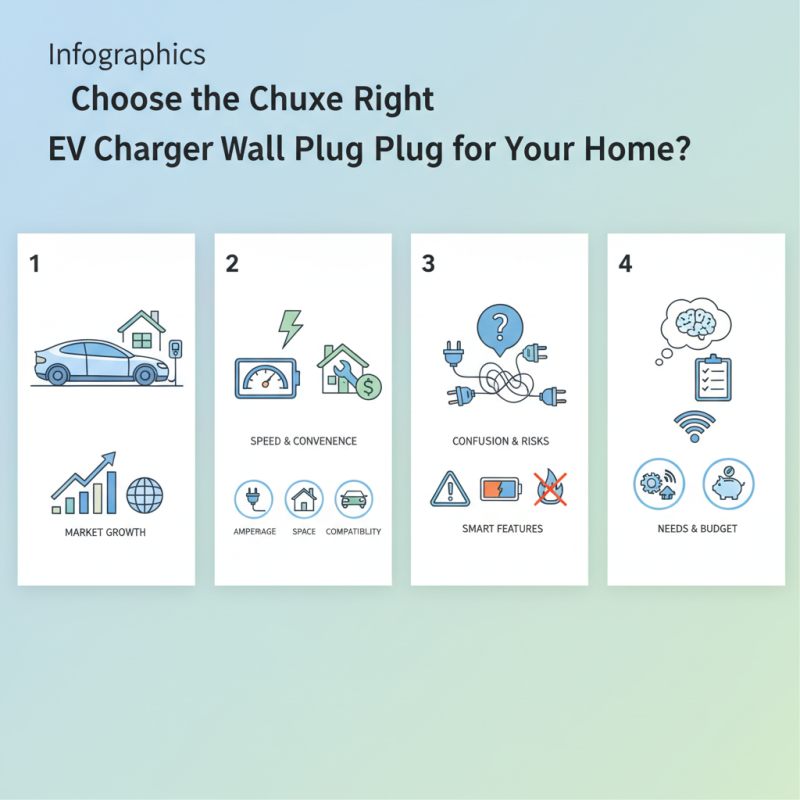
Choosing the right Ev Charger Wall Plug is crucial for every electric vehicle owner. The global electric vehicle market is expected to grow significantly, reaching over 31 million units by 2030, according to a recent report by BloombergNEF. As more people adopt electric vehicles, the demand for efficient home charging solutions rises.
A suitable EV Charger Wall Plug can enhance charging speed and convenience. However, many homeowners are unsure about what to look for when making this choice. Key factors include amperage, installation space, and compatibility with your vehicle. For instance, Level 2 chargers typically provide faster charging, but installation costs can vary widely.
The variety of options can overwhelm potential buyers. Choosing the wrong plug might lead to underwhelming performance or safety risks. Additionally, some EV Charger Wall Plugs lack essential features, such as smart charging capabilities. It's important to reflect on your specific needs and budget before making a decision.
Understanding Different Types of EV Chargers Available for Home Use
When choosing an EV charger for home use, it's essential to understand the types available. Primarily, there are three categories: Level 1, Level 2, and DC fast chargers. Level 1 chargers use a standard household outlet and are the slowest option. They can take up to 20 hours to fully charge an EV, making them less ideal for daily drivers.
Level 2 chargers are more popular. They require a dedicated circuit and can charge a vehicle in about 4 to 10 hours. According to a recent study by the U.S. Department of Energy, 80% of EV owners prefer Level 2 charging at home for its speed and efficiency. DC fast chargers, while extremely quick, are often impractical for home use due to their high installation costs and power requirements.
Tips: Consider your daily driving habits. If you have long commutes, a Level 2 charger is likely necessary. Also, assess your electrical capacity. Upgrading your home’s electrical system can be costly and time-consuming. Take your time, research each type thoroughly, and reflect on your needs. Balance between speed and cost is key. Verify local regulations regarding installation—there may be restrictions to keep in mind.
Evaluating Charging Speed and Power Requirements for Your EV
When selecting an EV charger, speed and power are critical factors. Charging speed varies significantly. Level 1 chargers provide about 4-5 miles of range per hour. A Level 2 charger increases this to 25 miles per hour, making it far more efficient. According to a report from the U.S. Department of Energy, most consumers find that Level 2 chargers meet their needs effectively.
Power requirements are equally important. Most EVs require a minimum of 32 amps to charge efficiently. Yet, many homes may not support this amperage without upgrades. An estimated 30% of homes could struggle with this. The National Renewable Energy Laboratory indicates that most EV users charge overnight, limiting the need for extensive power requirements during peak hours.
It’s essential to assess your electrical system before purchasing a charger. Older homes may need an electrical panel upgrade. Otherwise, you might end up with a charger that underperforms. Understanding your daily driving habits can help determine the necessary charging specifications. Many drivers overlook this, which can lead to frustration and longer downtimes. Prioritizing these factors before making a decision could enhance your EV experience significantly.
Assessing Installation Requirements and Location for EV Chargers
Choosing the right location for your EV charger is crucial. Consider the proximity to your parking space. You'll want to minimize cable length for safety and efficiency. A closer installation can also reduce costs. Think about your daily routines. If you charge overnight, easy access is essential.
Installation requirements vary significantly. Check local building codes for permits. Your electrical system must support the charger. It's wise to consult with a professional to assess your home's wiring. If your home lacks capacity, upgrading may be necessary. How much power do you need? This impacts both choice and installation.
Consider accessibility for everyone in your household. Is the charger easily reachable? Will you park in a garage or on the street? Each choice brings unique challenges. Sometimes, you might not have the ideal location. That’s okay; it’s worth revisiting the options. Balancing convenience and safety is key in your decision.
Comparison of EV Charger Types for Home Use
Comparing Costs and Budgeting for EV Charger Purchase and Setup
When considering the costs associated with installing an EV charger, budget is key. A report from the U.S. Department of Energy states that the average cost of a Level 2 charger ranges from $400 to $1,200. Installation fees vary by location and complexity, often adding $200 to $1,000 to the total. This means you could face costs between $600 and $2,200 for a complete setup.
Home wiring is another factor. If your electrical system is outdated, it may require an upgrade. This could add $1,000 or more to your project, leading to unexpected expenses. Therefore, having a professional assessment is often necessary. The time taken for installation and any necessary permits can also impact your budget. Consider this when planning your EV charger purchase.
Understanding your charging needs is crucial. Daily mileage affects the type of charger you choose. If you only drive short distances, a basic model may suffice. But for long commutes, investing in a higher-capacity unit makes sense. Planning for future costs, like maintenance or potential electrical upgrades, is essential. Each aspect of your setup could change your overall financial picture significantly.
Exploring Smart Features and Connectivity Options in EV Chargers
When choosing an EV charger wall plug, smart features can make a big difference. Look for options that allow remote monitoring and control. This is especially useful for busy individuals. For instance, you can manage charging times during off-peak hours. This feature saves money and reduces energy costs. Imagine knowing when your vehicle is fully charged without walking to the garage.
Another important aspect is connectivity. Chargers that integrate with home networks offer numerous benefits. They can send notifications to your smartphone. You might receive reminders to charge your EV or alerts about charging status. Some chargers even provide real-time diagnostics. This could help in identifying issues early on. However, not all chargers offer reliable connectivity.
Consider user-friendliness, too. A complicated interface can be frustrating. It’s essential to ensure that the charger is easy to use. Sometimes, chargers do not work well with all vehicles. Research compatibility ahead of time. Ultimately, the right charger should enhance your experience, not complicate it.
How to Choose the Right EV Charger Wall Plug for Your Home?
| Feature | Description | Connectivity | Smart Features |
| Charging Speed | Varies by charger type, typically Level 1 (120V) and Level 2 (240V). | Wi-Fi, Bluetooth | Scheduling, Remote monitoring |
| Plug Type | Type 1 (SAE J1772), Type 2 (IEC 62196) | Ethernet | Over-the-air updates |
| Power Rating | Common ratings include 3.7kW, 7.4kW, 11kW, and 22kW. | Mobile App, Cloud Service | Energy usage tracking |
| Safety Features | Overcurrent protection, short circuit protection, ground fault protection. | Smart Home Integration | Voice control |
| Warranty | Varying lengths, commonly 2 to 5 years. | API Access | User alerts |