How to Choose Solar Power Panels for Home?
Choosing solar power panels for home is not simply a matter of comparing wattage and prices. Your roof, local climate, electricity use, and available sunlight all affect the result. A panel that performs well in a dry, open field may produce less energy on a shaded suburban roof.
This guide explains how to assess panel efficiency, durability, temperature performance, warranties, and manufacturer reputation. It also considers installation quality, because even excellent panels can underperform when wiring, roof placement, or system design is neglected. Look for tested products, clear technical data, and installers with verifiable experience. Independent certifications and realistic production estimates matter more than impressive advertising claims.
No panel is perfect. A higher efficiency rating may cost more without providing meaningful savings for every household. The cheapest quote can also become expensive when maintenance, replacement parts, or roof work are overlooked. Check your recent electricity bills, inspect the roof, and compare several detailed proposals. Ask how the system performs during cloudy seasons and whether monitoring is included.
Small details matter.
The best choice balances energy production, budget, roof conditions, expected service life, and future needs. This article will help you question sales claims, understand essential specifications, and select a safer, more dependable solar solution for your home. Be prepared to revise your first preference. Careful research often changes it.
Assess Home Energy Use and Size a Solar System with 12-Month kWh Data
How to Choose Solar Power Panels for Home?
Begin with 12 months of electricity bills, not one unusually low month. Record each month’s kilowatt-hours and calculate the yearly total. This reveals heating, cooling, and holiday-related changes. I once sized a system from spring usage alone. It looked efficient, but summer cooling later exposed the mistake. Real data matters.
Suppose a home uses 9,600 kWh annually. That equals about 26.3 kWh per day. In an area receiving 4.5 peak sun hours, include system losses of roughly 20 percent. The estimated system size becomes about 7.3 kilowatts. With 400-watt panels, that means approximately 19 panels. This is only a planning estimate. Roof direction, shading, temperature, and local weather can change production.
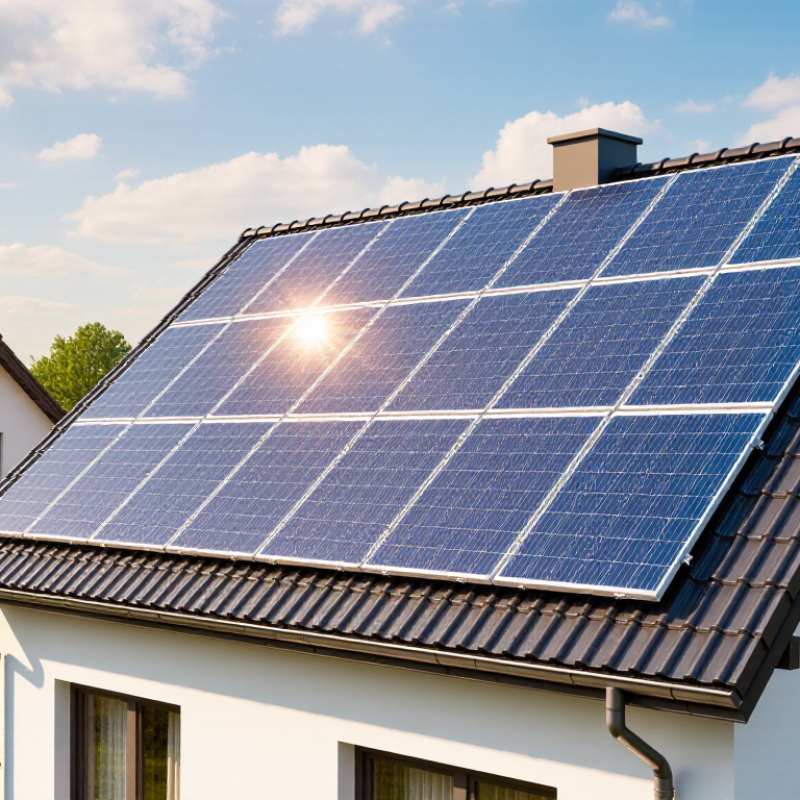
Walk around the roof at different times. A chimney shadow at 9 a.m. may disappear by noon, while nearby trees can reduce output throughout the year. Check usable roof space, structural condition, and the electrical service before selecting panel size. Ask a qualified installer to verify production with local solar data and approved design software. Review winter output carefully, especially when electric heating is used. Batteries may improve evening use, but they can also add cost and maintenance. My own preference is to leave room for uncertainty rather than design around perfect sunlight.
How to Choose Solar Power Panels for Home?
Assess your household energy use with 12-month kWh data before sizing a solar system. This representative profile compares monthly electricity consumption with estimated output from a 6 kW rooftop solar system.
Annual household consumption: 7,440 kWh. Estimated annual solar generation: 6,576 kWh. The remaining grid electricity is calculated as household consumption minus on-site solar production, with no export credit included.
Compare Panel Efficiency Ratings, Typically 19%–23%, for Limited Roof Space
How to Choose Solar Power Panels for Home?
When roof space is tight, panel efficiency deserves careful attention. Fraunhofer ISE’s Photovoltaics Report 2024 places many commercial crystalline-silicon modules around 19%–23% efficiency. A 23% panel converts more sunlight into electricity than a 19% panel of the same size. The difference seems small. On a compact roof, it matters.
For example, a 400-square-foot roof area may hold fewer panels than expected after vents, skylights, and safety clearances. Higher efficiency can preserve useful capacity without expanding the array. Yet efficiency is not the whole decision. NREL’s 2024 Best Research-Cell Efficiencies chart shows laboratory results far above commercial modules. Those figures demonstrate technical potential, not guaranteed household output.
Check the panel’s temperature coefficient, warranty terms, and performance under partial shade. A roof can look sunny at noon but lose output from a chimney after 3 p.m. In my experience reviewing system layouts, careless shading assumptions often undermine impressive efficiency ratings. Roof direction matters too. A slightly less efficient panel on an unshaded surface may outperform a higher-rated panel near obstructions. That is easy to miss.
Use an independent production estimate, such as NREL’s PVWatts tool, rather than relying only on the nameplate rating. Compare annual kilowatt-hours per square meter, not efficiency alone. Ask for the calculation assumptions. They may be imperfect. Good decisions leave room for correction.
Evaluate Roof Orientation, Shade, and Peak Sun Hours Before Choosing Panels
How to Choose Solar Power Panels for Home?
Your roof deserves a careful inspection before you compare panel specifications. In the northern hemisphere, south-facing roofs usually receive the strongest daily sunlight. East- and west-facing roofs can still perform well, especially when morning or afternoon energy matters. In the southern hemisphere, the direction is generally reversed. Roof pitch also affects production, although it is rarely the only deciding factor. A local solar professional can measure orientation and pitch more accurately than a quick online estimate.
Shade creates a bigger problem than many homeowners expect. A chimney, nearby tree, or neighboring building may cover only a few panels, yet reduce output during important hours. Watch the roof from 9 a.m. to 3 p.m. across different seasons. Then check your area’s peak sun hours, not just its annual sunshine description. Peak sun hours represent usable sunlight, and they help produce a more realistic energy estimate. Be cautious with promises. Weather, dust, aging equipment, and winter shadows can all lower actual performance.
Tips: Photograph the roof at different times. Ask for a shade analysis. Compare estimated output with your past electricity bills. Leave space for safe maintenance. No assessment is perfect. A small measurement error can change the payback calculation, so request clear assumptions and review them before choosing panel capacity.
Check Panel Degradation Rates Near 0.3%–0.5% Annually and Warranty Terms
How to Choose Solar Power Panels for Home?
Panel degradation deserves careful attention before you compare prices. A good target is roughly 0.3%–0.5% power loss annually. This rate affects your system’s output after ten, twenty, or thirty years. A panel producing 400 watts today may produce less later. The difference can become significant across a large rooftop.
Read the warranty language, not just the headline number. Check the initial degradation limit and the annual rate afterward. Some warranties cover product defects, while others cover long-term performance. Confirm the warranty period, claim process, labor coverage, and transfer rules. Weather exposure matters too. Heat, humidity, snow, and poor ventilation can influence real-world results. Actual performance may differ from the brochure. I once focused too heavily on rated efficiency and overlooked installation conditions. That was a useful mistake.
Tips: Ask for the degradation formula in writing. Compare the guaranteed output at year 25, not only the first-year rating. Keep installation records, invoices, and performance reports. Check whether roof repairs or removal costs are excluded. Review the warranty’s definition of acceptable power loss. A low annual rate is valuable, but unclear terms can weaken its practical benefit. Also inspect the installer’s experience with local roof designs. The best panel still performs poorly when shading, wiring, or ventilation is ignored.
How to Choose Solar Power Panels for Home? - Check Panel Degradation Rates Near 0.3%–0.5% Annually and Warranty Terms
Typical residential solar panel specifications and selection considerations
| Panel Technology |
Typical Module Efficiency |
Typical First-Year Degradation |
Typical Annual Degradation After Year 1 |
Common Performance Warranty |
Approximate Output Retained After 25 Years |
Homeowner Suitability |
| Monocrystalline PERC |
19%–22% |
1.0%–2.0% |
0.40%–0.50% |
25–30 years |
Approximately 82%–87% |
A practical choice for most homes, especially where roof space is limited. |
| Monocrystalline TOPCon |
20%–23% |
0.8%–1.0% |
0.30%–0.40% |
25–30 years |
Approximately 86%–90% |
A strong all-around option when high efficiency and low degradation are priorities. |
| Monocrystalline HJT |
20%–23.5% |
0.5%–1.0% |
0.25%–0.35% |
25–30 years |
Approximately 88%–92% |
Well suited to hot climates because of strong temperature performance and low degradation. |
| Polycrystalline Silicon |
16%–19% |
1.0%–2.5% |
0.50%–0.70% |
25 years |
Approximately 78%–85% |
Can be suitable where roof area is ample and the initial purchase price is the main concern. |
| Thin-Film CdTe |
17%–19% |
1.0%–2.0% |
0.30%–0.50% |
25–30 years |
Approximately 82%–88% |
Useful for large roof areas or ground-mounted systems, subject to local availability. |
Selection checklist:
Prioritize panels with annual degradation near 0.3%–0.5%, a clearly stated 25–30-year performance warranty, a separate product warranty of at least 10–15 years, suitable efficiency for the available roof area, and published testing information from an accredited laboratory.
Note: The figures shown are typical industry ranges for residential modules. Actual performance depends on the specific model, climate, installation quality, shading, orientation, maintenance, and the exact warranty terms.
Compare Total Costs, Incentives, Inverter Ratings, and 25-Year Energy Yield
How to Choose Solar Power Panels for Home?
Choosing home solar panels begins with total cost, not the panel’s advertised price. Include equipment, installation, permits, roof repairs, monitoring, maintenance, and possible battery storage. Request a written estimate with production assumptions. A low quote may hide necessary electrical work. Read the fine print.
Incentives can reduce the purchase cost, but eligibility depends on location, income, property status, and installation dates. Confirm current rules with an official government source or a qualified tax professional. Do not treat a sales estimate as guaranteed savings. I have seen homeowners overestimate returns because they ignored grid charges and changing electricity rates. Small errors matter.
Compare inverter ratings as carefully as panel wattage. Check continuous output, peak capacity, conversion efficiency, operating temperature, and expected service life. The inverter must match the array and household demand. A larger inverter is not automatically better. It may operate inefficiently when the panels produce little power.
For a realistic 25-year energy yield, review annual degradation, roof direction, tilt, shade, local weather, and cleaning needs. Ask for year-by-year production estimates rather than one lifetime figure. A panel may promise high output on paper but perform differently under heat or partial shade. Include inverter replacement risk in your long-term calculation. The forecast will still be imperfect, especially if trees grow near the roof.