What is a Lithium Battery Car and How Does it Work?
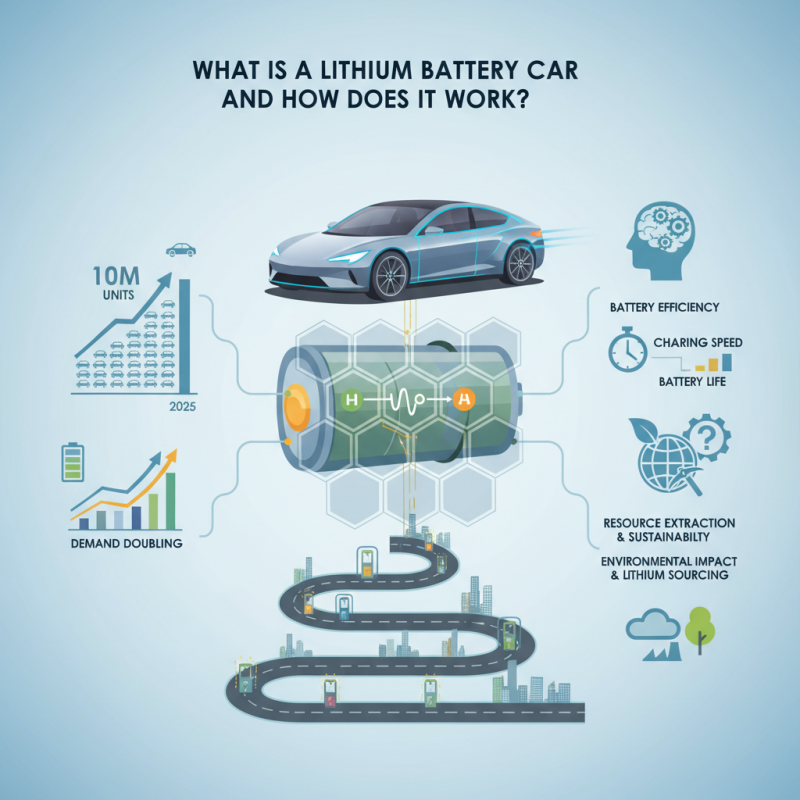
The Lithium Battery Car represents a significant shift in the automotive industry. With global sales projected to reach 10 million units by 2025, these vehicles are becoming mainstream. According to a report by the International Energy Agency, the demand for lithium-ion batteries is expected to double in the coming years. This shift brings both excitement and challenges.
Experts emphasize the importance of understanding battery technology. Dr. Emily Chen, a leading researcher in lithium battery innovations, stated, “The efficiency of a Lithium Battery Car heavily relies on advancements in battery life and charging speed.” Yet, concerns about resource extraction and sustainability remain prevalent. The industry must address these issues to ensure a responsible future.
While the technology showcases immense potential, there are hurdles to overcome. Infrastructure for charging is expanding, but it isn't uniform. There are still regions lacking the necessary support. As the market grows, so does the need for critical discussion on the environmental impact of lithium sourcing. This nuanced conversation will play a crucial role in the evolution of the Lithium Battery Car.
What is a Lithium Battery Car? Definition and Overview
A lithium battery car uses lithium-ion technology for power. These cars are designed to be more efficient and environmentally friendly. The electric motor in these vehicles enables smooth acceleration and quiet operation. Unlike traditional gasoline cars, they rely on rechargeable batteries. They are often seen as the future of transportation.
Tips: Regular charging is essential. Overcharging can reduce battery life. So always monitor your battery status.
Lithium batteries are lightweight, which contributes to a car's efficiency. However, they require careful handling. Improper disposal can lead to environmental issues. Understanding the battery's lifespan is crucial. A short lifespan can be disappointing for users. So, consider all aspects before making a choice.
Tips: Keep your battery temperature in check. High heat can damage performance. Avoid extremes for better longevity.
Key Components of Lithium Battery Cars: An In-depth Look
Lithium battery cars rely on several key components for optimal performance. At the core is the lithium-ion battery pack. This pack typically contains multiple cells connected in series and parallel arrangements. For instance, a typical electric vehicle might have a battery capacity ranging from 30 to 100 kWh. As a result, these cars can achieve significant ranges, often over 300 miles on a single charge.
The battery management system (BMS) is another critical component. It monitors the health of the battery cells, ensuring safe operation and longevity. Research shows that a well-functioning BMS can enhance battery life by up to 30%. However, many users may not realize that temperature fluctuations can adversely affect performance.
Additionally, the electric motor converts electrical energy into mechanical energy. These motors vary in efficiency, with some rated above 90%. Yet, inefficiencies can lead to lost energy, highlighting a need for ongoing improvements in design. Charging infrastructure also plays a vital role. Fast charging options are widely available, yet concerns about accessibility in some regions persist, indicating room for growth in this sector.
How Lithium-ion Batteries Function in Electric Vehicles
Lithium-ion batteries are essential to the functionality of electric vehicles (EVs). These batteries store energy, powering the vehicle's electric motor. They consist of an anode, cathode, and electrolyte, which facilitate the movement of lithium ions. During charging, lithium ions flow from the cathode to the anode. Discharging occurs when these ions move back, producing electricity. This cycle is efficient but not without its flaws.
One challenge is battery degradation over time. Capacity diminishes with usage and environmental factors. Temperature extremes can impact performance significantly. Tips: Always park in shaded areas during hot weather. This simple action could prolong battery life.
Another consideration is the charging infrastructure. Not all locations offer fast or convenient charging options. This can lead to range anxiety for drivers. Tips: Plan routes in advance and map out charging stations. A little preparation goes a long way in alleviating stress during longer trips.
The future of lithium-ion batteries looks promising but has hurdles. Research continues into improving lifespan and efficiency. It's essential to remain aware of these limitations while enjoying the benefits of electric mobility.
Performance Metrics: Energy Density and Cost Analysis
Lithium battery cars represent a significant shift in automotive technology. Their performance relies heavily on two key metrics: energy density and cost analysis.
Energy density is essential. It measures how much energy a lithium battery can store relative to its weight. A higher energy density means longer range for the vehicle. This is crucial for drivers who want to avoid frequent recharging. Currently, lithium-ion batteries often have energy densities around 150-250 Wh/kg. This can be improved with new technologies, but the results are not always guaranteed.
Cost analysis is equally important. Lithium batteries can be expensive to produce. The price of raw materials fluctuates, affecting the overall cost. As demand increases, costs may rise, impacting affordability for consumers. Companies must find ways to lower production costs without sacrificing quality.
Tip: When considering a lithium battery car, think about its range and cost. Research average prices in your area before buying.
Another consideration is battery lifespan. Many car owners expect batteries to last a long time, but this can vary. Environmental factors influence battery performance. As such, some batteries may degrade faster than anticipated.
Tip: Regular maintenance can help extend battery life. Monitor charging habits and temperature levels for better performance.
Future Trends in Lithium Battery Technology for Automotive Use
The future of lithium battery technology in the automotive sector is promising yet challenging. Lithium batteries are becoming the standard for electric vehicles. They offer high energy density and faster charging times. However, there are concerns about resource scarcity and environmental impact. Producing lithium batteries requires mining, which can harm ecosystems. Innovation is crucial in addressing these issues.
Researchers are exploring new chemistries to enhance battery performance. Solid-state batteries are a hot topic. They could provide greater safety and efficiency. This shift may reduce reliance on liquid electrolytes, which can be flammable. However, the transition is not without obstacles. Manufacturing processes for solid-state batteries need further development. And costs must be lowered for mass adoption.
Recycling is another area that needs attention. As lithium battery use grows, so does electronic waste. Developing efficient recycling methods is essential. It could lessen the environmental burden and reclaim valuable materials. The future looks bright, but there are hurdles to overcome. Each step forward requires careful consideration and innovation.