
Top Graphite Raw Material Suppliers for Global Buyers

Global graphite procurement rarely begins with a supplier name. It begins with a specification: flake size, carbon content, moisture limits, and intended use. A battery producer may need consistent purity, while a foundry may prioritize dependable volume and price. Small differences matter. Graphite Raw Material varies by deposit, processing route, and quality controls, so a catalog description alone is not enough. Buyers should compare technical data sheets with representative samples and request batch-level test results. Clear documentation helps reduce surprises at receiving docks.

This guide examines leading graphite raw material suppliers serving international buyers and the factors behind a reliable shortlist. It considers product range, production capacity, export experience, traceability, communication, and the supplier’s ability to meet agreed specifications. These indicators do not guarantee performance. A polished website cannot replace a verified process, and a low quotation may omit packaging, inspection, or freight costs. Buyers should confirm current certificates, sample consistency, lead times, and contract terms directly with each company. Supplier rankings can become outdated as capacity and market conditions change. That deserves attention. The right partner depends on application, location, and risk tolerance, not brand visibility alone. This overview offers a practical starting point, but procurement teams should verify critical claims before placing an order.
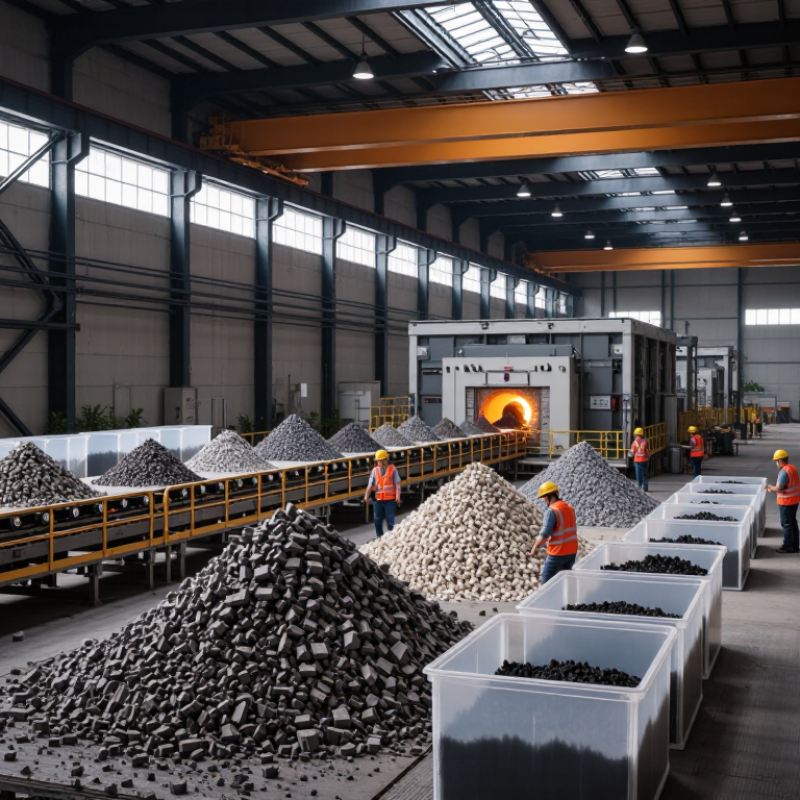
Top Graphite Raw Material Suppliers for Global Buyers

Graphite Raw Materials and Their Role in Global Industries

Graphite is not a single, interchangeable material. Natural graphite comes in forms such as flake and amorphous, while synthetic graphite is made through industrial processing. Their properties affect performance, cost, and suitability in steelmaking, refractories, lubricants, and battery components. A buyer specifying only “graphite” may miss important differences in particle size, purity, and processing requirements.

The U.S. Geological Survey’s Mineral Commodity Summaries 2024 estimated global natural graphite mine production at about 1.6 million metric tons in 2023, with China producing roughly 1.23 million tons. This concentration makes supplier diversification and clear origin documentation practical concerns. The International Energy Agency’s Global Critical Minerals Outlook 2024 projects that graphite demand for clean-energy technologies could grow more than fourfold by 2040 under its Net Zero Emissions scenario. That is a forecast, not a guarantee. Suppliers therefore matter beyond shipment volume: reliable specifications, consistent testing, and traceable batches can help manufacturers manage changing demand. Yet quality data may still vary between producers, and buyers should verify samples against their own process conditions. Small differences can matter.

Types of Graphite Offered by International Suppliers

Top Graphite Raw Material Suppliers for Global Buyers

Types of Graphite Offered by International Suppliers

International suppliers typically offer natural flake, amorphous, vein, and synthetic graphite. Natural flake graphite has visible plate-like particles and is sold in different size ranges. Buyers may use it in battery anodes, refractories, or expandable graphite products, depending on processing and specifications. Amorphous graphite is finer and often serves foundry, lubricant, and refractory applications. Vein graphite is less common and can offer high carbon content, but availability varies. Synthetic graphite is manufactured from carbon feedstocks and can provide more controlled properties. It also usually requires energy-intensive production.

Supply scale matters. The US Geological Survey’s Mineral Commodity Summaries 2025 estimates global natural graphite mine production at about 1.6 million metric tons in 2024, with China producing roughly 1.27 million. These figures describe mined natural graphite, not synthetic material. For buyers, a product name alone is not enough. Check fixed carbon, ash, moisture, particle-size distribution, and consistency between shipments. Specifications can look perfect on paper. Samples may tell a different story.

Tips: Match grade to the process, then request a recent certificate of analysis and representative sample. Ask how particle size is measured and whether testing follows a stated method. Small differences matter. I would also verify packaging and moisture controls before signing off; those details are easy to overlook.

Graphite Types Offered by International Suppliers

Representative fixed-carbon content ranges for common commercial graphite types.

Ranges are indicative, not guaranteed specifications. Actual fixed-carbon content varies by grade, processing, and supplier; check individual product data sheets.

How to Evaluate Graphite Suppliers for Quality and Reliability

Reliable graphite sourcing starts with evidence, not a polished sample. Request lot-specific certificates of analysis and compare fixed carbon, ash, moisture, sulfur, particle-size distribution, and trace metals against your process requirements. One certificate is not a trend. Review results across several lots, and ask how sampling and testing are performed. Small differences in particle size can affect blending, handling, and product consistency.

Supply concentration matters too. The USGS Mineral Commodity Summaries 2024 estimated global natural graphite production at 1.6 million metric tons in 2023, with China producing 1.23 million. The IEA’s Global Critical Minerals Outlook 2024 also identifies graphite as a highly concentrated supply chain. Buyers should check where material is mined, processed, and stored, rather than relying on a single country-of-origin statement. Ask suppliers to explain backup capacity, lead times, and how they communicate delays.

A useful audit looks beyond paperwork. Check whether the supplier can trace a shipment to its production lot, retain samples, and investigate out-of-spec results. Request recent test records and confirm that independent laboratory results align with supplier data. A neat spreadsheet helps. It does not prove stable production. I would still treat a perfect-looking audit as provisional; a brief review can miss dusty storage, damp bags, or inconsistent labeling.

Global Sourcing Factors: Pricing, Logistics, and Compliance

For global graphite buyers, the lowest quoted price rarely tells the whole story. Compare material grade, particle size, moisture limits, and packaging before weighing offers. A small difference in specifications can affect processing yield and usable volume. Ask suppliers for recent test results and confirm that samples match the production lot. Small details matter.

Logistics can change the landed cost quickly. Check whether quotes include inland transport, export handling, insurance, and port charges. Confirm packaging suits the route: torn bags or damp pallets can create avoidable losses. Ask about typical lead times and how delays are communicated. Even careful forecasts can be wrong, especially when vessel schedules shift. Keep a practical buffer rather than planning around a perfect arrival date.

Compliance checks should be part of supplier evaluation, not an afterthought. Request clear product descriptions, origin information, safety documentation, and shipment records. Then verify destination-market requirements with a qualified customs or compliance professional; rules and documentation needs can vary. A neat file set helps, but it does not guarantee clearance. One common blind spot is comparing suppliers on price while overlooking traceability. Reliable sourcing depends on evidence, clear specifications, and candid answers when a supplier cannot meet a requirement.

Matching Suppliers and Graphite Grades to Buyer Requirements

Top Graphite Raw Material Suppliers for Global Buyers

Matching Suppliers and Graphite Grades to Buyer Requirements

Choosing a graphite supplier starts with the process, not a sales sheet. A foundry may need coarse flakes for thermal performance, while a lubricant producer may prioritize fine, consistent particles. Battery applications can require tighter controls on purity, particle shape, and moisture. The grade name alone tells little. Check fixed carbon, ash, particle-size distribution, and test methods before comparing offers.

Ask suppliers for recent certificates of analysis and samples from representative lots. Test those samples using your own production conditions where possible. A powder that flows well in a jar may behave differently in a feeder. Packaging matters, too: sealed moisture-resistant bags can reduce handling problems during storage and transit. Confirm lot traceability, available volumes, lead times, and how the supplier reports changes in specification.

A specification can look complete and still miss a production issue. That deserves a second look. Buyers should state acceptable limits clearly, then ask how consistency is monitored between shipments. Price remains important, but a cheaper grade may create extra screening, waste, or downtime. There is no perfect match for every process; the best choice is the grade that meets technical needs reliably, with evidence to support it.

Top Graphite Raw Material Suppliers for Global Buyers - Matching Suppliers and Graphite Grades to Buyer Requirements

Supplier Type Typical Graphite Material Common Commercial Specifications Typical Forms Best Match for Buyer Requirements Key Sourcing Checks
Natural flake graphite producers and processors Natural flake graphite, generally offered in several carbon grades and flake sizes Common fixed-carbon grades include approximately 90%, 94%, 95%, and 97%; sizing is commonly specified by mesh range or particle-size distribution Powder, screened flakes, and micronized material Refractory products, foundry applications, lubricants, and buyers seeking natural flake properties at a specified cost and purity Confirm fixed carbon, ash, moisture, sulfur, flake-size distribution, origin, and consistency between shipments
High-purity natural graphite processors Purified natural flake or fine graphite High-purity material is commonly specified at 99.95% carbon or higher, subject to the agreed test method and impurity limits Fine powder, micronized powder, and customized particle-size grades Battery-related applications, specialty materials, and industrial uses with stringent impurity requirements Request a full impurity analysis, particle-size data, purification-process details, and representative production-lot samples
Spherical graphite processors Spherical graphite made by shaping and classifying natural flake graphite Battery-grade specifications are buyer-specific; carbon purity is often around 99.95% or higher, with particle size and yield agreed by contract Spherical powder in controlled particle-size distributions Anode-material supply chains requiring spherical particles and defined electrochemical performance Evaluate particle shape, particle-size distribution, tap density, surface area, moisture, impurities, and qualification results
Synthetic graphite manufacturers Artificial graphite produced from carbon feedstocks through high-temperature processing Purity, ash, sulfur, particle size, and structure vary by application; specifications should be defined on a grade-by-grade basis Powder, granules, blocks, and application-specific fractions Buyers prioritizing controlled material properties, consistent performance, or synthetic graphite characteristics Check source and consistency of feedstock, production route, carbon content, ash, sulfur, particle size, and supply capacity
Graphite electrode and carbon-product material suppliers Graphitized carbon materials and graphite products; some suppliers also offer qualified graphite feedstock Specifications depend on product type and intended use; electrical, physical, and chemical properties should be stated separately Powder, granules, blocks, or processed components Industrial buyers seeking a particular processed form or a supplier able to support further conversion Clarify whether the offer is raw material or a finished product; verify dimensions, density, strength, resistivity, and chemical analysis as applicable
Graphite recycling and reclaimed-material suppliers Reclaimed graphite recovered from manufacturing scrap or end-of-life material Grade and consistency depend on the source stream and sorting process; no universal carbon or impurity specification applies Sorted chunks, granules, or processed powder Cost-sensitive industrial applications that can accept a qualified recycled material stream Confirm feedstock history, traceability, contamination controls, batch testing, and suitability for the intended application

Procurement note: Specifications shown are typical market reference points, not guarantees for any supplier or shipment. Buyers should define test methods, tolerances, packaging, documentation, sample approval, and acceptance criteria in the purchase contract.