What Are the Top Solar Panels in the USA?
Choosing the best solar panels in the USA is not as simple as comparing wattage or reading a five-star review. Homeowners must consider efficiency, heat performance, warranty coverage, degradation rates, and installer quality. A panel that performs well in Arizona may not be the best choice for a snowy roof in Maine. Local shade matters too.
This guide examines leading solar panels USA homeowners can realistically purchase through reputable installers. It compares established manufacturers, panel technologies, efficiency ranges, product warranties, and real-world suitability. It also explains why certification, documented testing, and long-term company stability deserve attention. IEA Executive Director Fatih Birol has described solar power as “the cheapest source of electricity in history.” That statement reflects solar’s growing competitiveness, but it does not guarantee savings for every household.
The details matter.
A premium panel may produce more electricity from limited roof space. However, its higher price may weaken the payback period. A lower-cost model may work better when the roof is large and electricity rates are moderate. Battery storage, installation workmanship, permitting, and regional incentives can change the final outcome. Even careful comparisons have limits because prices and incentives shift quickly. That is an uncomfortable point. There is no universal winner.
Readers should use this overview as a practical starting point, then request several itemized quotes from qualified, licensed professionals. Ask for equipment datasheets, labor terms, expected annual production, and warranty conditions. The strongest decision balances performance, cost, climate, roof design, and trust.
Solar Panel Basics and Key Performance Criteria
What Are the Top Solar Panels in the USA?
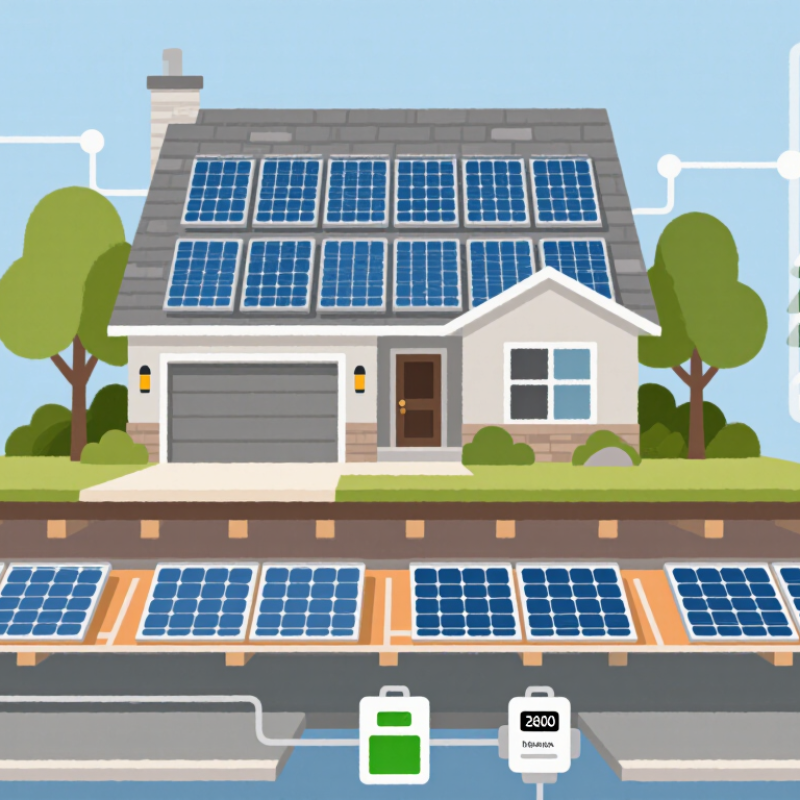
Choosing solar panels starts with understanding how they work. Photovoltaic cells convert sunlight into direct-current electricity. An inverter then changes it into household alternating current. On a clear roof, panels may produce strong output, but shade can reduce production sharply. A nearby chimney can matter more than a high laboratory rating.
Efficiency shows how much sunlight becomes electricity under test conditions. Higher efficiency can help when roof space is limited. Power rating, measured in watts, estimates panel capacity rather than daily energy. Temperature coefficient matters in hot climates because output usually falls as panels heat up. Look for clear warranties, transparent test data, and certifications required for local installation. Independent testing is useful, although no test perfectly copies your roof.
Durability also deserves attention. Glass, framing, and sealed connections must withstand wind, rain, and repeated temperature changes. Ask an installer to compare annual energy estimates with your roof’s direction, pitch, and winter shading. It is easy to trust a spreadsheet too much. Tall trees, afternoon shadows, or dusty surfaces can challenge its neat prediction. That small doubt matters. Price per panel can mislead, because installation, wiring, permits, and maintenance affect the real cost. Check the fine print carefully.
Top Solar Panel Brands and Their Distinctive Strengths
What Are the Top Solar Panels in the USA?
Top Solar Panel Brands and Their Distinctive Strengths
The strongest solar panel brands in the USA differ by performance, durability, and service support. High-efficiency panels suit compact roofs with limited usable space. Premium models often exceed 22% efficiency, while standard modules commonly remain near 20%. NREL’s 2024 photovoltaic cost benchmark places a typical residential system near $3.15 per watt before incentives. That figure shows why efficiency alone cannot determine value. A cheaper panel may perform well on a large, unshaded roof.
Manufacturers with strong field histories often emphasize low annual degradation, robust warranties, and stable temperature performance. A lower temperature coefficient can protect output during hot summer afternoons. This matters in Arizona, Texas, and other high-heat regions. Berkeley Lab’s Tracking the Sun 2024 report found the median U.S. residential system reached about 8.7 kilowatts in 2023. For such systems, even small output losses become measurable over time. Warranty language deserves careful reading. Some claims sound impressive but exclude labor, shipping, or installation defects.
Independent testing also separates serious products from polished marketing. Look for IEC certification, published degradation data, and third-party reliability results. The PVEL Module Reliability Scorecard has repeatedly shown differences in thermal cycling, damp heat, and mechanical stress performance. Still, laboratory results cannot predict every roof. Shading, ventilation, snow loads, and installer quality may matter more than a small efficiency gap. I would not choose a panel from its headline number alone. That shortcut is tempting, but incomplete.
What Are the Top Solar Panels in the USA? - Top Solar Panel Brands and Their Distinctive Strengths
| Panel Technology |
Typical Module Efficiency |
Typical Power Output |
Temperature Coefficient |
Key Strength |
Best Application |
| N-Type TOPCon |
Approximately 22%–24.5% |
430–650 W |
Approximately −0.29% to −0.32%/°C |
High efficiency, low light-induced degradation, and strong energy yield in hot climates |
New residential and commercial installations |
| Heterojunction (HJT) |
Approximately 22%–24.5% |
430–620 W |
Approximately −0.24% to −0.29%/°C |
Excellent temperature performance and lower power loss during hot weather |
Hot regions, rooftops with limited space, and high-yield projects |
| IBC / Back-Contact |
Approximately 22%–24.7% |
400–470 W |
Approximately −0.29% to −0.30%/°C |
Very high efficiency and an unobstructed front surface with clean appearance |
Premium residential rooftops and design-focused installations |
| P-Type PERC |
Approximately 19%–22.5% |
350–550 W |
Approximately −0.34% to −0.38%/°C |
Widely available, proven manufacturing process, and competitive initial cost |
Budget-conscious residential and utility-scale projects |
| Bifacial Glass-Glass |
Approximately 20%–24% |
450–700 W |
Approximately −0.29% to −0.35%/°C |
Can generate additional electricity from reflected light reaching the rear side |
Ground mounts, bright surfaces, carports, and elevated systems |
| Flexible Thin-Film |
Approximately 10%–18% |
Up to approximately 500 W, depending on format |
Often better heat performance than conventional crystalline silicon |
Lightweight construction and suitability for curved or weight-sensitive surfaces |
Specialty roofs, portable systems, and structures with limited load capacity |
Selection note:
Actual efficiency, power rating, degradation rate, dimensions, and warranty terms vary by individual module model. Final selection should also consider roof area, shading, climate, snow and wind requirements, inverter compatibility, installer quality, and total installed cost.
How to Compare Solar Panels for Different American Homes
Choosing the best solar panels depends on the American home, not only the panel’s efficiency rating. A compact roof may need high-efficiency panels to produce enough electricity. A larger roof could favor lower-cost panels with strong long-term performance. Roof direction, shade, snow, heat, and local electricity prices also matter.
In hot states, compare temperature performance because panels usually produce less power as temperatures rise. In snowy regions, check load ratings and installation methods. Homes near the coast may need materials that resist moisture and corrosion. Ask for third-party test results, degradation rates, warranty terms, and safety certifications. A reliable installer should calculate annual production using your roof’s angle and nearby shade, not provide a generic estimate. A higher efficiency number is not automatically the better choice. That detail is easy to miss.
Tips: Compare at least three written quotes. Check usable roof space, inverter compatibility, and future battery plans. Request production estimates for winter and summer. Read the warranty exclusions carefully. Also, confirm local permits and utility requirements before signing. Small paperwork errors can delay installation.
The best comparison includes total cost, expected energy, maintenance access, and installer experience. Some homeowners focus too heavily on panel appearance. That can be a mistake. I would also question unusually optimistic savings figures, because weather and household habits rarely follow perfect forecasts.
What Are the Top Solar Panels in the USA?
Comparing common solar technologies for different American homes
How to read this chart: Monocrystalline modules generally provide the highest efficiency and are often the best fit for homes with limited roof space. Polycrystalline modules can be suitable where roof area is less constrained and upfront cost is a priority. Thin-film modules have lower efficiency but may perform well on lightweight, irregular, or low-load structures. Actual performance depends on roof orientation, shading, temperature, installation quality, and local sunlight conditions.
Typical module-level ranges summarized from U.S. Department of Energy and National Renewable Energy Laboratory technology references; values vary by product generation and installation conditions.