How to Choose Reliable Solar PV Installers?
Choosing solar is a long-term decision, and the installer can shape how well the system performs. A roof may look simple from the driveway, yet vents, shade, and aging shingles can complicate a careful layout. Reliable solar pv installers examine these details before recommending equipment. They should explain how panel placement, inverter choice, and household energy use affect the proposal. A confident sales pitch is not the same as a sound design.
Look for clear evidence of experience, not just impressive claims. Ask for recent projects similar to your home, and check whether the company can provide local customer references. A useful site visit should include roof measurements, an inspection of the electrical panel, and questions about your typical power use. The written quote should itemize equipment, labor, expected production, and warranty coverage. Compare estimates on the same basis. A cheaper bid may leave out important work.
Pay attention to communication. Does the installer answer specific questions, explain assumptions, and describe who handles follow-up service? These practical signs can matter as much as a panel brand. Still, no checklist removes every uncertainty; energy estimates depend on weather, shade, and future usage. It is easy to focus on headline savings and overlook the details. Take time to review them. A reliable choice is one you understand, not merely one you are urged to make.
Define Your Solar PV System Requirements
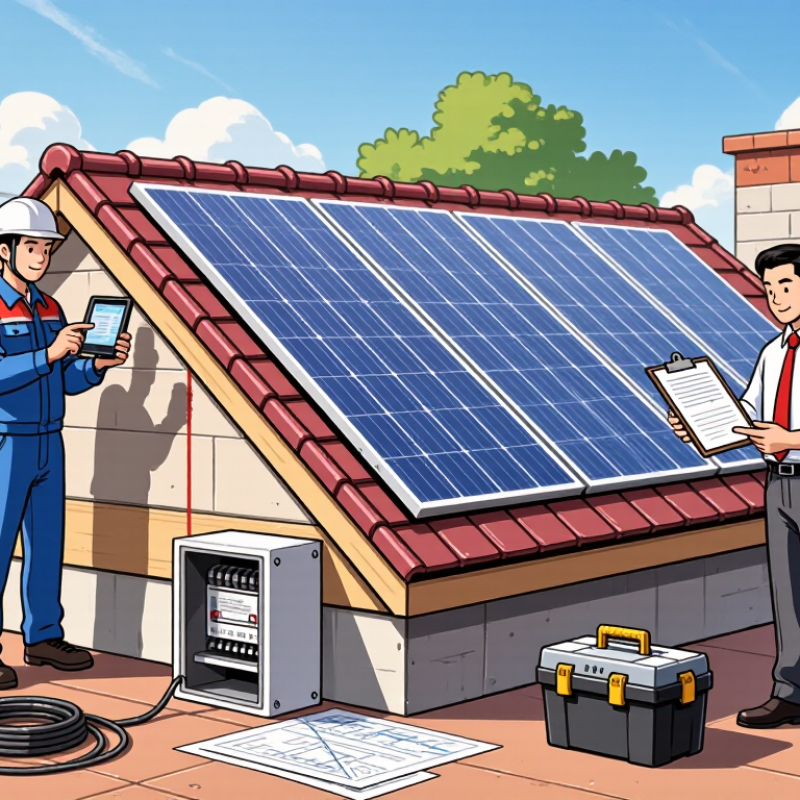
Before requesting quotes, define what your household needs the solar PV system to do. Review twelve months of electricity bills, rather than relying on one unusually high month. Note seasonal changes, daily usage, and when demand peaks. A home using most power after sunset may benefit from battery storage; a daytime-heavy household may need less. Details matter. List essential appliances for outages and estimate how long they should run. Include likely future loads, such as an electric vehicle or heat pump, but do not size the system around vague plans.
Record practical site conditions: roof age, usable area, orientation, and shade from nearby trees. Mention planned roof work, too. Ask for an on-site assessment; satellite images may miss new shading or roof details. State whether you want grid-connected operation, backup power, or both. Request annual energy estimates and the assumptions behind them. Compare inverter capacity and usable battery capacity, not just panel count or advertised storage. One easy mistake. Focusing only on panel numbers can overlook evening demand. Mark uncertain future needs as estimates, so installers can explain how those assumptions affect system size, cost, and expected performance.
Verify Installer Credentials, Licenses, and Insurance
Before comparing solar proposals, verify that the installer holds the required electrical and contractor licenses for your location. License rules differ by jurisdiction, so check the number directly with the issuing authority and confirm it covers photovoltaic work. SEIA and Wood Mackenzie reported that U.S. solar installations reached 32.4 gigawatts in 2023, up 51% from 2022. That rapid growth makes careful checks worthwhile; market expansion alone does not prove an installer is qualified. Ask who will perform the wiring and roof work, and confirm each subcontractor is properly credentialed. A polished proposal can still leave gaps.
Check whether any claimed professional certification is current through its issuing organization. It should complement, not replace, required licenses. Request an insurance certificate showing general liability and workers’ compensation coverage, then confirm the policy dates and named business with the insurer. Make sure the coverage applies to the work at your home. Ask for written confirmation before crews arrive. Small detail, big difference. Read the contract for the installer’s legal business name and compare it with the license and insurance documents. If names, dates, or coverage limits do not match, pause and ask for clarification. I would not treat a photocopy as final proof; documents can be outdated, and this check is easy to overlook.
Assess Technical Experience and System Design
A reliable solar installer should show how technical experience shapes the system design. Ask for examples of completed projects with similar roof angles, shading, and local weather. A site visit should check roof condition, electrical-panel capacity, and nearby trees—not just use satellite images. Roofs vary. Request the proposed panel layout and ask how shade on one section affects the system’s output. NREL’s PVWatts tool estimates production using local weather and system details such as tilt and orientation. Compare its estimate with the installer’s forecast, and ask them to explain any major difference.
Proposals should state the system’s DC capacity, inverter size, expected annual production, and assumptions about shading and losses. NREL’s Q1 2024 cost benchmark models a representative 8-kWdc residential rooftop system; that benchmark helps compare proposals, but does not mean every home needs an 8-kW system. In a separate review, NREL researchers analyzed nearly 2,000 photovoltaic degradation rates and found a median rate near 0.5% per year. This is a broad historical finding, not a performance guarantee for a particular roof. Ask how the installer accounts for degradation in long-term production estimates. I would still question any forecast that appears unusually precise: weather, future shade, and roof changes introduce uncertainty. Request the assumptions in writing, including the weather data and shading method used.
Compare Quotes, Equipment, Warranties, and Contracts
A reliable solar quote should explain every cost, not just show one attractive total. EnergySage’s 2024 Solar Marketplace Intel Report put the average quoted residential system price at $2.80 per watt in 2023. NREL’s Q1 2023 benchmark estimated a modeled residential PV-only system at about $2.90 per watt DC. These figures use different methods, so treat them as reference points, not promised prices. Ask each installer to itemize equipment, roof work, permits, and any electrical upgrades. Read the exclusions. A low quote may leave out a new service panel or roof repairs.
Compare equipment by specification, not just by panel count. Check the proposed system’s expected annual output, inverter type, monitoring access, and assumptions about shade. Ask for product warranties and workmanship coverage separately; they protect against different problems. The contract should state who handles warranty claims and how quickly service is expected. Small print matters. I have seen estimates that make production look certain, even though tree growth and weather are not.
Before signing, check payment milestones, cancellation terms, project dates, and written change-order rules. Make sure the quoted price matches the contract, including fees and promised upgrades. Request the production assumptions in writing, such as roof direction and shading. If two estimates differ sharply, ask each installer to explain the gap with a marked-up roof plan. I still find this part awkward: a polished sales proposal can feel more convincing than a careful technical explanation. Ask for the calculation anyway.
Review Installation Standards and Ongoing Support
Reliable solar PV installation depends on documented standards and support after commissioning. Ask whether the installer follows current electrical and structural codes, uses compatible, certified components, and records torque settings, cable routes, and test results. You should receive single-line diagrams, equipment manuals, warranty terms, and commissioning measurements—not just a neat inverter display. IEA PVPS Task 13’s 2020 review reported a median PV performance loss rate near 0.5% per year across studied systems. That is a broad benchmark, not a promise for every roof or climate.
Ongoing support matters when output drops or a fault appears. Check who reviews monitoring alerts, how quickly they respond, and whether service visits are included or billed separately. NREL’s Best Practices for Operation and Maintenance of Photovoltaic and Energy Storage Systems highlights monitoring, inspections, and preventive maintenance as core practices. Request a sample maintenance schedule and a written escalation process. A vague “lifetime support” claim sounds reassuring, but it is hard to judge without response times and exclusions. I would also ask how shading, dust, and seasonal production are distinguished from equipment faults.
Tips: Compare two written proposals. Ask for recent commissioning records and a sample service report. Confirm who handles warranty claims, and keep copies of every test result. Small details count. A missing cable label is not proof of poor work, but repeated gaps deserve questions.
How to Choose Reliable Solar PV Installers?
Relevant IEC standards and their publication years
Ask installers how their design, safety checks, commissioning tests, and handover documents align with these standards. IEC 62446-1:2016 was amended in 2018. Standards do not guarantee ongoing service, so also request written details of workmanship coverage, monitoring, and support arrangements; these vary by contract.
Source: IEC standard designations and publication years. Confirm the applicable editions for your location.