Finding trusted solar experts in 2026 means looking beyond polished websites and low headline prices. A rooftop system is a long-term investment, and a poor design can affect energy bills, roof work, and future repairs. The International Energy Agency’s executive director, Fatih Birol, described solar’s growing role this way: “Solar becomes the new king of electricity markets.” That shift makes careful installer selection even more important.
Start with the details you can verify. Check whether an installer holds credentials recognized in your area, carries appropriate insurance, and has completed projects on homes like yours. Ask for recent customer references, then ask those homeowners about installation delays, system performance, and how quickly problems were addressed. Details matter. Compare written proposals line by line: panel and inverter models, estimated annual production, roof or electrical work, warranties, and any assumptions about shade. A sunny sales forecast is not a guarantee. Request the assumptions behind it, including your roof’s orientation and local weather data.
Trusted solar experts explain trade-offs without pressuring you to sign immediately. They should distinguish equipment warranties from workmanship coverage and explain who handles service if the company changes ownership. Check local complaint records and confirm that permits and utility approvals are included in the proposed process. No rush. I would still ask one more question: what could make the system produce less than estimated? A clear, specific answer is more useful than a perfect sales pitch. The goal is not to find the cheapest quote, but a qualified team whose work, promises, and follow-through can be checked.
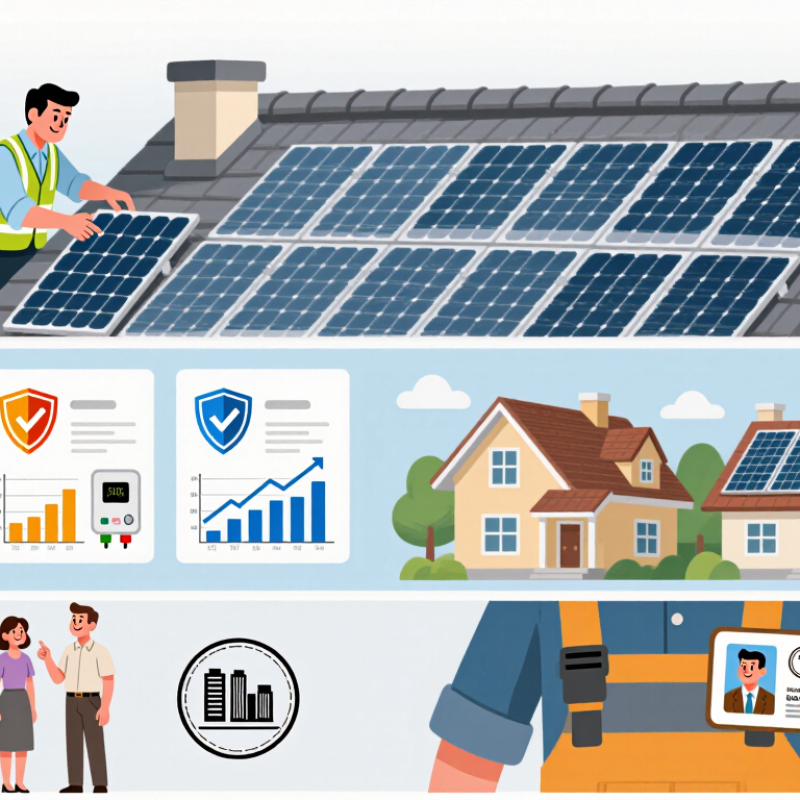
Before comparing solar experts, define what your home needs. Gather twelve months of electricity bills and note planned changes, such as an electric vehicle or heat pump. EIA data puts average U.S. household electricity use at 10,791 kilowatt-hours in 2022, but your own usage matters more than that benchmark. Record roof age, sunny and shaded areas, and any trees that cast afternoon shadows. Take a few clear photos. Small details help.
Your local rules shape system design and project timing. Ask the building department about permits, inspections, roof setbacks, and documentation. Check with your utility about interconnection steps, export compensation, and whether a battery changes the process. Requirements differ by location, so get current guidance rather than relying on a neighbor’s older project. Details shift.
The scale of the market is useful context, not a sizing guide: SEIA and Wood Mackenzie reported 50 gigawatts of U.S. solar installations in 2024. Ask prospective experts to explain their proposed system against your bills, roof conditions, and local requirements. Request written assumptions for estimated production and any shading losses. A polished proposal can still overlook a future roof repair. It is worth asking what the estimate leaves out.
A solar proposal can look polished while leaving important questions unanswered. The 2024 Solar Market Insight report from the Solar Energy Industries Association and Wood Mackenzie recorded 32.4 gigawatts of U.S. solar installations in 2023. A growing market makes careful credential checks especially useful. Ask for the installer’s license number, then verify its status and scope with the relevant state or local authority. Requirements differ by location. Check that the person overseeing the work holds any required qualifying license, too. If an installer lists NABCEP certification, verify the credential through the certification organization’s directory. A certificate on a sales folder is not the same as confirmed status.
Insurance deserves the same attention. Request a current certificate of general liability coverage and workers’ compensation, where applicable. Confirm the business name, policy dates, and coverage limits match the contract. Call the insurer or agent using independently verified contact details; documents can be outdated. IRENA and the International Labour Organization’s Renewable Energy and Jobs: Annual Review 2024 estimated 7.1 million solar photovoltaic jobs worldwide in 2023. That figure describes a vast workforce, not the quality of any individual installer. Ask who will actually be on your roof, who supervises them, and who handles damage or injuries. Small details matter: a mismatched company name or expired policy should prompt another question. A neat certificate still cannot prove careful roof work.
A solar proposal can look polished while hiding gaps in field experience. Ask how many systems the installer has completed nearby and how many resemble your roof, electrical service, and shade conditions. Local experience matters. Snow, wind, roof materials, and utility requirements can change the work. Request examples from two recent projects, including one with a similar roof pitch or panel layout. Details count. Ask who performs the electrical work, manages permits, and responds if system monitoring later shows a fault.
Reviews can reveal patterns that a sales meeting may not. Read recent comments across several independent review sites, not just the testimonials on an installer’s own website. Look for specific accounts of scheduling, workmanship, cleanup, and follow-up service. A complaint alone proves little; repeated reports of unanswered calls or unexplained delays deserve closer attention. I would not treat a perfect rating as proof. Some satisfied customers simply never post.
Ask for references from customers whose systems have been operating for at least a year. With their permission, ask how closely the final installation matched the written plan, whether costs or timelines changed, and how quickly problems were handled. A short conversation can expose what polished photos cannot. References are often selected by the installer, so compare them with independent reviews and verify the project details. If an answer feels vague, pause and ask again.
A low total price can hide a smaller system, a basic inverter, or extra roof work billed later.
Compare each proposal using system size, price per watt, estimated annual production, and included services. Lawrence Berkeley National Laboratory’s 2024 Tracking the Sun report analyzed roughly 3.5 million U.S. rooftop systems, showing the scale and diversity behind residential solar pricing. Treat any benchmark as a reference, not a promise: roof shape, shading, local labor, and electrical upgrades change the final cost.
Scope matters.
Ask each installer to list equipment models, panel and inverter capacities, monitoring, permits, utility coordination, and any battery separately. Check that production estimates state their assumptions for shade, degradation, and future electricity use.
Read every warranty as a set of distinct promises.
Panel performance coverage does not automatically pay for labor, leaks, or inverter replacement. Request the term, exclusions, claim process, and who handles service if the installer closes. Then inspect the contract for payment milestones, change-order fees, project dates, cancellation terms, and any annual payment increase.
A long warranty can sound reassuring. The details may disappoint.
Ask for a sample production calculation and a written explanation of what happens if actual output falls short. I would still compare the paperwork line by line; even careful buyers can miss a small fee buried in an attachment.
Finding a trusted solar expert in 2026 means checking the work behind the sales pitch. Ask for a written scope covering roof condition, electrical design, permits, commissioning tests, and inspection records. SEIA and Wood Mackenzie reported that the United States installed 32.4 gigawatts of solar capacity in 2023. A growing market makes careful vetting more important, not less.
Confirm who is responsible if a roof leak appears or the monitoring system stops reporting. Get separate warranty terms for equipment and workmanship, plus a clear service contact and response process. NREL’s 2024 Annual Technology Baseline uses 0.7% yearly degradation in its utility-scale PV modeling. That figure is a planning assumption, not a guarantee for a home system. Ask how the installer tracks actual production and explains any shortfall. A polished proposal can still leave gaps; I would check the handoff details twice.
Tips: Request sample commissioning documents and a service agreement before signing. Check that the installer explains system shutdown and monitoring in plain language. Keep copies of permits, inspection results, equipment warranties, and a dated system layout. Ask who answers after installation, not just who makes the sale.