Reducing your home solar power system cost requires more than choosing the cheapest equipment. Roof condition, local sunlight, electricity rates, permits, and installation quality all affect the final price. A low quote may exclude wiring upgrades, monitoring hardware, or future maintenance. Small details matter.
This guide shares practical ways to control spending without weakening system safety or performance. You will learn how to compare detailed quotes, size panels around real household usage, and evaluate batteries carefully. A qualified installer should explain system design, warranties, expected production, and local requirements in clear language. Independent research also helps you question impressive savings claims.
In practice, the best decision is rarely the cheapest option. Efficient panels can cost more initially, yet limited roof space may justify them. Conversely, a large battery may add thousands of dollars without improving your payback period. That estimate can change. Utility rules, financing rates, tax policies, and installer availability differ by location and time. Treat every calculation as a planning tool, not a guarantee.
You should also inspect the roof before signing a contract. Replacing shingles after installation can create avoidable costs. Ask whether the proposal includes permits, labor, equipment removal, and system commissioning. These questions expose hidden charges early. The following tips focus on realistic savings, responsible purchasing, and decisions that remain useful beyond the sales conversation.
Before comparing equipment quotes, measure your home’s actual solar energy needs. The U.S. Energy Information Administration reported average residential electricity use of about 10,800 kilowatt-hours in 2022. Your household may differ sharply. Review twelve months of utility bills, noting summer cooling, winter heating, and future changes such as an electric vehicle. Do not size the system from one unusually high bill. That shortcut can inflate costs.
Use the National Renewable Energy Laboratory’s PVWatts tool to estimate local production. Enter your roof direction, tilt, shading, and available area. A south-facing roof is not automatically ideal in every location. Trees can create expensive afternoon losses. Measure carefully. Then set a realistic budget, including design, permits, labor, maintenance, and possible electrical upgrades. NREL’s Annual Technology Baseline shows that installed solar costs vary by project type and market conditions, so online averages are only starting points.
Request at least three written proposals with identical assumptions. Compare system capacity, estimated annual output, battery size, warranty terms, and cash price. The Lawrence Berkeley National Laboratory’s Tracking the Sun report shows meaningful variation in residential solar prices across regions and system designs. Ask what caused each difference. I once underestimated roof repairs; that mistake changed the budget. A smaller system may be wiser than borrowing for maximum production. Leave room for uncertainty, because shading, weather, and household usage rarely follow forecasts exactly.

Tip 1: Start with your hourly electricity use, not your roof size. A recent utility bill can reveal expensive evening peaks and seasonal changes.
Tip 2: Compare system designs, including south-facing arrays, east-west layouts, and limited roof coverage. The cheapest design may not produce the best value.
Tip 3: Request production estimates based on local weather data. Generic online calculators often feel precise, but they can miss shade from a nearby tree.
Tip 4: Compare equipment by warranty terms, efficiency, degradation, and replacement costs. Higher efficiency helps when roof space is tight.
Tip 5: Ask whether battery storage is necessary. NREL’s 2024 cost benchmark shows that adding storage can raise residential solar costs substantially, so backup needs should guide the decision.
Tip 6: Check inverter sizing carefully. An oversized inverter can increase upfront costs without improving annual output.
Tip 7: Obtain at least three itemized proposals. Each quote should separate panels, labor, permits, electrical upgrades, monitoring, and maintenance. Small omissions can become large surprises.
Tip 8: Compare providers by licensing, insurance, installation history, and service response time. Industry experience matters more than polished sales language.
Tip 9: Review the estimated first-year production against data from the National Renewable Energy Laboratory’s PVWatts tool.
Tip 10: Negotiate using comparable designs, not only lower prices. Berkeley Lab’s Tracking the Sun reports show that residential installed prices vary widely, even within similar markets. A cheaper quote may exclude roof repairs, main-panel work, or realistic soft costs.
I would question any proposal promising perfect savings. Solar output changes with clouds, dirt, outages, and household behavior. Some estimates are simply too optimistic.
Reducing a home solar system’s upfront cost begins with incentives, not equipment shortcuts. The U.S. Internal Revenue Service allows a 30% Residential Clean Energy Credit for eligible systems through 2032. It can also cover qualifying battery storage. This is a tax credit, not an instant discount. Confirm eligibility with a qualified tax professional.
Local rebates may reduce the remaining balance. The Database of State Incentives for Renewables and Efficiency shows that programs differ widely by location, utility, and funding year. Some rebates close quickly. Check official government pages before signing a contract. Berkeley Lab’s 2024 Tracking the Sun report placed the 2023 median residential solar price near $3.1 per watt, before incentives. A 6-kilowatt system could therefore approach $18,600 before credits, although roof design and regional labor can change that figure.
Financing can preserve savings, but the lowest monthly payment is not always the cheapest choice. Compare the annual percentage rate, loan term, dealer fees, and prepayment rules. A longer loan may add thousands in interest. Cash flow matters too. No calculator captures every roof surprise. I would request at least three itemized proposals and ask for written assumptions about permits, panel removal, and future repairs. The U.S. Department of Energy recommends evaluating total system cost, expected production, and available incentives together. That advice sounds basic, yet many estimates still hide soft costs inside one attractive monthly payment.
| Tip | Cost-Reduction Strategy | Useful Planning Data | Potential Financial Effect | Important Conditions |
|---|---|---|---|---|
| 1 | Compare at least three written installation quotes. | Request the same system size, equipment capacity, warranty terms, permitting scope, and estimated annual production in every quote. | Can reveal meaningful price differences for identical project specifications. | Compare total installed cost, not only the advertised price per watt. Confirm whether electrical upgrades, permits, monitoring, and roof work are included. |
| 2 | Reduce the system size through energy efficiency first. | LED lighting, air-sealing, insulation, efficient appliances, and thermostat improvements can reduce annual electricity consumption before system sizing. | Every kilowatt of solar capacity avoided reduces panel, racking, labor, and balance-of-system costs. | Complete major efficiency work before the final solar design. A professional load analysis should account for future electric vehicles, heat pumps, or electric water heating. |
| 3 | Use local and utility incentives. | Rebates, performance payments, property-tax exemptions, sales-tax exemptions, and low-income programs vary by location and funding availability. | Incentives may reduce the purchase price or improve project payback. | Check official federal, state, local, and utility program rules before signing a contract. Some programs require pre-approval, approved contractors, income qualification, or specific equipment. |
| 4 | Verify the applicable federal tax credit before installation. | Federal residential clean-energy incentives have changed over time and may depend on placed-in-service dates, eligible costs, ownership, and current tax law. | A tax credit can reduce federal tax liability when the homeowner qualifies. | Eligibility is not the same as a cash rebate. Confirm current rules with the tax authority or a qualified tax professional, and retain invoices, contracts, and installation records. |
| 5 | Compare cash, secured, and unsecured financing. | Compare annual percentage rate, loan term, origination fees, dealer fees, prepayment terms, and total repayment—not just the monthly payment. | A lower total interest cost can substantially improve lifetime savings. | Longer terms generally reduce monthly payments but increase total interest. Avoid assuming that a promotional rate or low payment represents the lowest overall cost. |
| 6 | Use a home-equity option only after reviewing total risk and cost. | Home-equity loans and lines of credit may offer lower rates than unsecured borrowing, but terms and variable-rate exposure differ. | Potentially lower borrowing costs than high-interest unsecured credit. | These products may use the home as collateral. Compare closing costs, rate adjustments, repayment schedules, and the effect on the household budget. |
| 7 | Choose the right system orientation and avoid unnecessary complexity. | Roof condition, shading, azimuth, tilt, local climate, and utility pricing affect annual production. In the United States, a typical system may produce roughly 1,200–1,700 kWh per kW annually, depending on location and design. | Better production from the same capacity can reduce the number of panels needed for a target energy output. | Do not select equipment solely by nameplate efficiency. Require a site-specific production estimate that includes shading and expected system losses. |
| 8 | Install solar before adding optional battery storage when appropriate. | Common residential battery systems are often sized around 5–15 kWh, but the required capacity depends on backup loads, outage goals, and tariff structure. | Omitting or downsizing a battery can significantly lower upfront project cost. | A battery may be justified for backup power, time-of-use savings, or limited export compensation. Ask for separate solar-only and solar-plus-storage proposals. |
| 9 | Schedule roof repairs or replacement before panel installation. | Solar modules commonly have 25-year performance warranties, while roof service life varies by material, installation quality, weather, and maintenance. | Avoids the labor and removal costs associated with taking panels off for later roof work. | Obtain a documented roof assessment. Combining roof work and solar may affect financing, warranties, insurance, and eligibility for certain incentives. |
| 10 | Review the contract, production guarantee, and payment schedule carefully. | Confirm system capacity, estimated annual generation, degradation assumptions, monitoring access, warranty coverage, change-order rules, and permission-to-operate responsibilities. | Prevents unexpected charges that can increase the final project cost. | Do not make the final payment until the agreed work is complete and the required inspections and utility interconnection steps are addressed. |
| Planning note: Actual savings depend on location, roof condition, electricity consumption, utility rates, shading, system size, financing terms, taxes, incentive eligibility, and installation quality. Incentives and tax rules can change; verify current requirements with the relevant government agency, utility, and a qualified tax professional. | ||||
Planning is not glamorous. It is where savings begin.
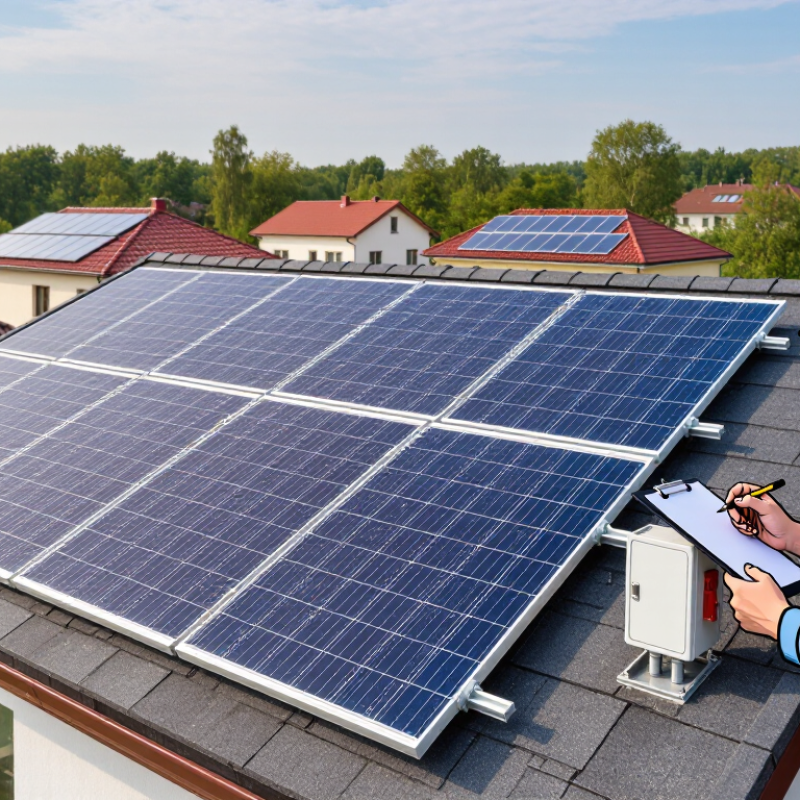
Before requesting installation quotes, inspect your roof’s age, shape, and remaining service life. Replacing an aging roof later can require expensive panel removal and reinstallation. That cost is easy to overlook.
Track your electricity use across several months, including seasonal peaks. A system sized from one low bill may perform poorly during hotter periods. Check afternoon shadows from trees, chimneys, and nearby buildings. Even a narrow shadow can reduce production across multiple panels.
Ask a qualified installer to measure roof orientation, structural capacity, cable routes, and electrical panel space. Clear drawings can prevent surprise labor charges.
Confirm permit requirements, utility approval steps, and inspection timelines before ordering equipment. Delays may create storage fees or force rushed decisions. Compare written quotes line by line, including scaffolding, monitoring, site repairs, and disposal. The lowest price may exclude essential work. It happens often.
Set aside a modest contingency fund for hidden issues, such as damaged roofing timber or outdated wiring. I would also question every proposed upgrade. Some are useful, but others add cost without improving output. A careful site visit and realistic energy target usually save more than aggressive bargaining.
Tip: Inspect the system twice a year, especially before summer. Check inverter messages, loose cables, cracked glass, corrosion, and water marks. A small fault can quietly reduce production for months. The National Renewable Energy Laboratory reports a median photovoltaic degradation rate of about 0.5% annually. That figure assumes reasonable maintenance, not neglect.
NREL, Photovoltaic Degradation Rates—An Analytical Review.
Tip: Monitor monthly output against sunlight conditions. Compare the same month from previous years, rather than judging one cloudy week. A sudden 10% drop deserves investigation. Record inverter readings, weather, cleaning dates, and unusual shading from growing trees. The International Energy Agency Photovoltaic Power Systems Programme identifies monitoring and preventive maintenance as important tools for improving system availability. Numbers help, but they do not explain everything.
Tip: Clean panels only when dirt visibly affects production. Use soft water and a non-abrasive brush, preferably during cool morning hours. Do not walk on the modules. Remove leaves around equipment, but never open electrical enclosures without qualified training. I once treated a minor output decline as normal seasonal variation; it was partial shading from a new branch. That mistake cost more than a simple inspection. Maintenance schedules should follow the installation manual and local safety requirements. Personally, I would rather document one uncertain reading than ignore a pattern.