
What the New OBBBA Rules Mean for Solar Projects

The solar industry has always evolved with policy shifts, but the One Big Beautiful Bill Act (OBBBA) introduces one of the biggest changes yet. For solar developers, business owners, and even communities looking at renewable energy, these new rules don’t just affect timing — they could decide whether your project qualifies for valuable federal tax credits.

The good news? The credits are still here. The challenge? The rules have tightened, and the clock is ticking.

At the heart of the OBBBA changes, the federal government kept the 30% Investment Tax Credit (ITC) intact. On top of that, developers can stack bonuses:

  • Up to 50% Total: You can earn additional 10% bonuses for using domestic materials and another 10% for projects located in “Energy Communities” (areas with historical fossil fuel-based economies).
  • 100% Bonus Depreciation: This allows you to write off the entire cost of the solar system in the first year, providing an immediate and substantial tax shield against income.This is new, and an interesting twist where the Biden policies and the Trump policies are both in effect.

For projects that move quickly, this adds up to a powerful incentive — potentially covering 50% or more of project costs. But those benefits now come with stricter timelines and stricter definitions of what “construction start” really means.


What Changed?

The 5% Shortcut Is Gone for Big Projects

Until now, many projects qualified for tax credits by spending just 5% of their costs up front, and receiving project equipment within 3.5 months. 
That “Safe Harbor” disappeared after September 2, 2025 for utility-scale solar.

👉 Only small solar projects (1.5 MW or less) can still use this shortcut. Larger projects must now prove real construction has started.

You Need Real Construction Work

The IRS now requires “physical work of a significant nature” — not just contracts and deposits.

✅ What counts: installing racks, pouring foundations, or having custom equipment built for your project.
❌ What doesn’t: permits, designs, paperwork, or buying generic equipment.

Deadlines Are Tighter

  • Start BEFORE July 4, 2026 → You’ll have up to 4 years to complete your system (through the end of 2030 if you start in 2026).
  • Start AFTER July 4, 2026 → You must be finished by December 31, 2027.

FEOC Restrictions Are Coming

Starting in 2026, new limits apply on projects that use too much equipment from “Foreign Entities of Concern” (mostly Chinese suppliers).

  • Projects started before December 31, 2025 skip the toughest part of these restrictions.
  • Waiting too long could mean more hurdles — or higher costs.

✅ What This Means for You

If you’re considering solar, this is the moment to act. By moving forward now:

  • Secure Maximum Credits: Lock in the 30% ITC plus any available bonus credits.
  • Avoid Future Hurdles: Protect your project from upcoming foreign sourcing restrictions and tighter deadlines.
  • Gain More Time: Ensure you have the maximum four-year window to complete your project.

🌞 Why Act With Us

At Solar Gain, we don’t just install solar — we help you navigate the rules, the incentives, the financing, and the deadlines so you capture every available benefit. Our team stays ahead of regulatory changes so you don’t have to.

The OBBBA rules are clear: time is running out. But with the right partner, you can still take full advantage.

📞 Contact us today to discuss your project, lock in your tax credits, and get started before these deadlines close the window on opportunity.


Written by Aastha Guliani
Does TEP Buy Back Extra Solar Power from My Home?

If you’re living in Tucson and looking to lower your electric bill, it makes sense to look to solar.

With over 280 days of sunshine annually, solar energy is a great way to reduce energy bills and even generate extra energy to put money back in your pocket!

Solar production is an excellent option for both homes and businesses in Tucson, but do they repay customers for generating excess solar? Read on to learn precisely how TEP supports solar power.

Solar and Tucson Electric Power

Tucson Electric Power is an electric utility company serving southern Arizona in the United States.

On the TEP website, you can find resources for solar homeowners and businesses looking into solar installations and comparing solar options.

REST

TEP falls under the Arizona Corporation Commission, which oversees Arizona’s entire electric power industry. In 2006, the Arizona Corporation Commission approved the Renewable Energy Standard and Tariff (REST).

These rules require that regulated electric utilities generate 15 percent of their energy services from renewable resources by 2025.

Arizona’s utility companies must file annual implementation plans each year describing how they will comply with the REST rules. The proposals include incentives for customers to install solar energy technologies for their homes and businesses.

The Commission’s Renewable Energy Standards encourage utilities to use solar, wind, biomass, biogas, geothermal, and other similar technologies to generate “clean” energy to power Arizona’s future.

Net Metering vs Net Billing

With net metering, customers get paid the total retail rate for unused, excess power generated by their solar system.

With net billing, commercial or residential customers get about 65% of the retail rate for excess power sent to the grid.

TEP offers net billing, not net metering. Your extra energy will earn you about 65% of the retail rate rather than the full rate. TEP calls this Resource Comparison Proxy (RCP) rate.

You are locked into the same RCP rate for ten years. After ten years of using your solar generating and battery storage systems, TEP will adjust to pay whatever the excess purchase rate is.

Benefits for Solar Customers

In Arizona, the purchase of solar equipment is free of all sales tax. While TEP does not offer specific incentives or rebates for solar customers, many of the same benefits of solar still apply, such as:

Solar is environmentally friendly

Solar comes with a low carbon footprint, helping to lower the usual carbon emissions produced by traditional energy sources. In this way, solar can save some green in more ways than one.

Solar is Cost-effective

While the initial installation of solar may seem pricey, it is a safe investment that will reliably reduce your energy costs over time.

Solar can help achieve Energy independence

Energy independence refers to getting all the energy your home or business needs from your renewable energy source rather than relying on the grid. Installing rooftop solar lowers your dependence on local power companies and can allow you to gain more control over your energy usage.

Extra source of income

The installation of solar panels often results in the generation of more energy than your business or household uses. The buyback rate for excess energy sent back to the grid varies by area but can help offset your investment in solar and your monthly energy costs.

Types of Solar Panels

Did you know there are different kinds of solar panels? The three main types used are monocrystalline, polycrystalline, and thin-film panels. Which panels are right for you depend on your energy goals, space, and budget.

Monocrystalline

Monocrystalline panels are the most common due to their durability and efficiency. While the upfront investment is higher than some other solar panels, the 20% direct sunlight-to-usable-energy conversion helps to offset their initial cost.

Polycrystalline

Polycrystalline panels are less expensive than monocrystalline and carry much of the same look and durability but are a bit less efficient in the long run, generating about 250 watts of power versus the 300 plus caused by monocrystalline.

Thin-Film

As the name suggests, thin film panels are thinner and lighter than poly and monocrystalline panels. They are less rigid and more accessible to both manufacture and install, setting them at a lower price point for upfront investment. However, they are less efficient and power-generating than their mono and polycrystalline counterparts.

Solar Gain for Rooftop Solar Customers in Tucson

Take advantage of the excess energy generated by our beautiful desert sun with rooftop solar systems.

Solar Energy Solutions by Solar Gain

Here at Solar Gain, we have more than ten years of experience in solar design and installation that can lead to a brighter future for your business and family.

Our solar panel installation is seamless and brings all the solar benefits you could ask for in a renewable power source. Lower your energy bills by harnessing the sun’s power to produce excess electricity for your home or business.

The Solar Gain team is Tucson’s local solar installers providing solar solutions in the areas of:

  • Commercial Solar
  • Residential Solar
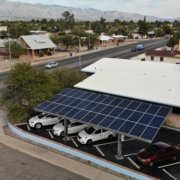
  • Solar Carports
  • Financing and Incentives
  • Service and Maintenance

And more!

Solar Gain provides business solar power systems that are seamlessly integrated into your work life and provide you with the best outcome.

Whether it is saving money, saving energy, or leaving a positive impression on the environment and community around you, solar is the solution you need.

Visit our website today to learn more or discuss a solar project for your home or business.

Why You Should Install Commercial Solar for Churches

Commercial Solar Solutions for Hotels

Fountain of Life Lutheran Church

Capistrano Apartments

Understanding Solar Energy Solutions

Is Solar Energy Right for Your Business?

Solar Energy Storage: What You Need to Know

Everything You Need to Know About Solar Carports