Choosing solar power panels for home in China is not just a matter of chasing the highest efficiency number. A rooftop in humid Guangdong faces different heat, rain, and shading conditions than one in dry Gansu. Roof direction, usable area, inverter compatibility, installer support, and household electricity use all affect system performance. Small details matter. International Energy Agency Executive Director Fatih Birol described solar as “the new king of electricity markets around the world.” That observation captures solar’s momentum, but it cannot identify the right system for every home.
This guide compares what buyers should check before choosing solar power panels for home: panel technology, output in real temperatures, product and performance warranties, and installation quality. It also considers battery storage, shading, system monitoring, and after-sales service. A premium panel can still disappoint if the roof layout is poor or the installer leaves cable runs exposed to weather. That is worth remembering. Even a careful comparison can overlook something. Prices and local connection requirements may change, so confirm current details with qualified local providers rather than relying on a single online ranking. There is no universal winner. The best choice is a balanced, verifiable system sized for the roof, climate, and family’s actual electricity use—not simply the panel with the boldest brochure.
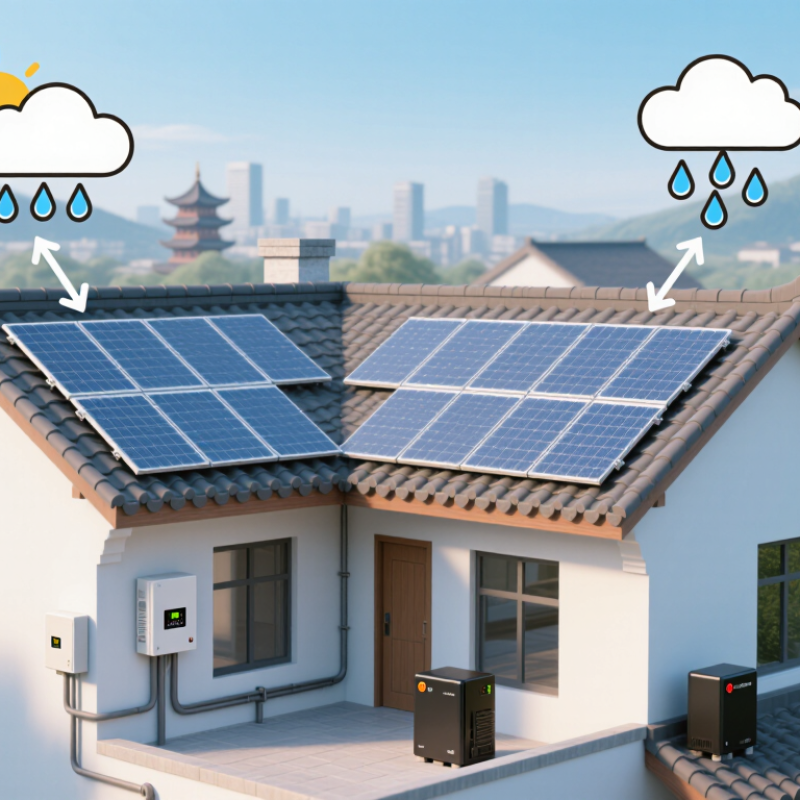
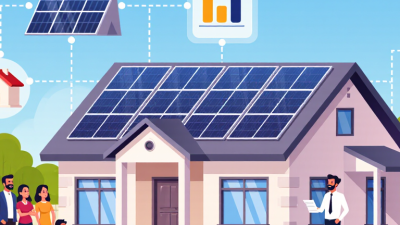
A home solar system in China turns sunlight into usable electricity in stages. Photovoltaic cells produce direct-current power when light reaches their semiconductor layers. An inverter then converts it into alternating current for household circuits, such as the refrigerator, lights, and washing machine. A grid-connected system can send surplus electricity to the local network; a battery can store some of it for later.
No sunshine, no fresh panel output.
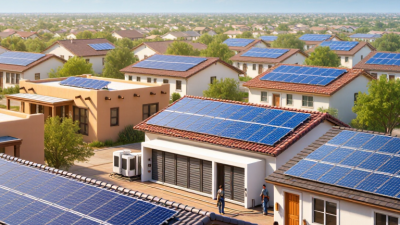
The roof matters more than the brochure suggests. Shade from a water tank, nearby tower, or even a tree branch can reduce production, while roof direction and tilt affect how much light the panels receive.
The International Energy Agency Photovoltaic Power Systems Programme reported that China added about 277 gigawatts of solar capacity in 2024. That figure includes large solar farms, not just homes, but it shows how quickly the country’s solar infrastructure is expanding. The National Energy Administration reported total installed solar capacity of about 887 gigawatts by the end of that year.
For a household, however, national growth does not guarantee a suitable roof or the same savings everywhere. Check daytime electricity use, shading, wiring, and local grid connection conditions before estimating returns.
Even a careful estimate can be imperfect.
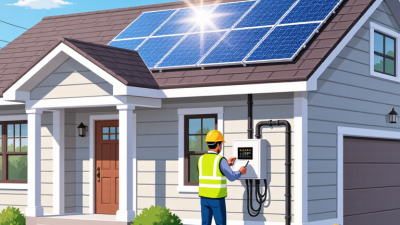
Choosing residential solar panels in China starts with your roof, not a headline efficiency figure. A south-facing, unshaded roof may capture more useful energy, but east- or west-facing roofs can still work. Ask an installer to inspect roof age, usable area, nearby trees, and afternoon shade. In humid southern areas, rain and heat affect equipment differently than dry northern winters. Panel temperature ratings, mounting hardware, and inverter matching deserve attention. Higher efficiency can help on a small roof, yet it does not automatically mean lower lifetime cost.
Compare verified power output, degradation terms, product and performance warranties, and local service access. Request a written estimate showing expected annual production, system losses, and shading assumptions. Check that the proposed design suits your household’s daytime use and any planned battery. Ask what happens if a panel or inverter fails. A spreadsheet can look precise while hiding uncertain weather and maintenance assumptions; treat forecasts as estimates, not promises.
Tips: Photograph the roof at several times of day. Keep recent electricity bills handy. Ask for independent test documents and a clear installation scope. Don’t choose on price alone. Small detail, big difference: safe roof attachment.
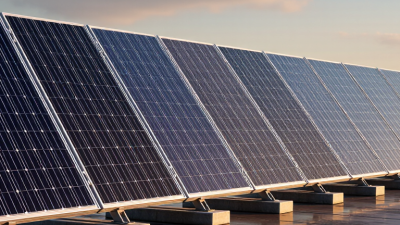
For Chinese homes, the main choice is usually between PERC, TOPCon, and heterojunction (HJT) monocrystalline panels. Fraunhofer ISE’s Photovoltaics Report 2024 states that crystalline silicon supplied over 97% of global solar-module production in 2023. That makes thin-film technology less common for typical home rooftops. PERC panels are established and widely available. TOPCon and HJT use newer cell designs and can offer higher efficiency, which may help when roof space is limited. But a newer label alone does not guarantee better household performance.
Performance depends on more than cell type. A shaded balcony, a hot roof, or a roof facing away from the sun can change annual output substantially. Check the panel’s rated power, temperature coefficient, dimensions, and product warranty, then compare these with your roof and inverter. The IEA PVPS Trends report tracks the rapid expansion of solar markets, but broad market data cannot predict one home’s energy yield. That part needs a site-specific estimate.
Tips: Ask for an energy estimate based on your roof’s direction, tilt, and nearby shade. Compare the assumptions with what you can see at home. It is easy to focus on efficiency figures; I might do the same. Yet usable roof area and installation quality can matter just as much.
For a home in China, panel efficiency matters most when roof space is limited. A higher-efficiency panel can produce more power from a small, shaded roof, but it may cost more upfront. Compare output per square metre, not just the efficiency percentage. Ask for estimates based on your roof’s direction, tilt, and nearby trees. A sunny afternoon can still hide winter shading.
Price needs context. Compare the full installed cost, including mounting, wiring, and inverter work, then consider expected electricity production over time. Local weather changes the calculation: hot summers can reduce output, while dust or coastal humidity may increase maintenance needs. Request assumptions in writing. Estimates can look precise while relying on optimistic shade or usage figures.
Durability is more than a long warranty. Check the stated degradation rate, product and performance coverage, and how the system handles wind, moisture, and temperature swings. Ask who inspects the roof and replaces faulty components. Read the exclusions carefully. A panel may last for decades, but poor installation can shorten system life. I would not choose solely by the lowest quote; comparing two or three detailed proposals often reveals what each installer has left out.
The best panel for a Chinese home depends on the roof, not just its rated output. Measure usable space after allowing for chimneys, vents, and maintenance paths. A shaded roof can lose more energy than a small difference in panel efficiency suggests. Small details matter.
China’s climates vary widely. In the humid south, check product specifications for heat and moisture performance; high temperatures can reduce output. In northern areas, allow for snow and wind loads, especially on raised frames. Northwest roofs may receive strong sunlight but collect dust, so cleaning access matters. Coastal salt air also deserves attention. Still, climate averages cannot predict every roof’s conditions.
For a small urban roof, higher-efficiency panels may provide more capacity in limited space. On a broad, unshaded roof, comparing total system cost and expected annual production may matter more than choosing the highest efficiency. Ask for estimates based on your roof’s orientation, tilt, shading, and local weather data. Have the roof structure assessed before installation. I would not trust a single annual-output number without its assumptions. That changes things. Check whether the estimate accounts for seasonal shade and hot-weather losses. A careful site review may reveal that fewer panels, placed well, suit your household better.
| Home or Site Condition | Panel Type to Consider | Why It May Fit | Key Checks Before Choosing | Practical Recommendation |
|---|---|---|---|---|
| Small roof or limited usable area | High-efficiency monocrystalline modules, such as TOPCon or heterojunction (HJT) | Higher module efficiency can provide more rated capacity from a limited roof area. Current mainstream high-efficiency products commonly fall in roughly the 21%–24% module-efficiency range, depending on product design and rating conditions. | Compare module efficiency, dimensions, rated power, and the installer’s layout plan. Leave space for roof edges, walkways, and maintenance access. | Prioritize usable capacity per square metre and a layout designed for the actual roof, rather than choosing by efficiency alone. |
| Hot summers or a roof that becomes very warm | TOPCon or HJT monocrystalline modules with a low power temperature coefficient | Solar-module output generally decreases as cell temperature rises. Many TOPCon products specify a maximum-power temperature coefficient around −0.29% to −0.35% per °C; HJT products often specify approximately −0.24% to −0.30% per °C. Actual values vary by product. | Check the module datasheet’s temperature coefficient and the proposed mounting ventilation. The coefficient describes change above the reference cell temperature, not the temperature of the surrounding air. | Compare datasheet coefficients and ensure the design allows airflow behind the modules; consider a site-specific energy estimate for hot regions. |
| Partially shaded roof, nearby trees, or several roof orientations | Panels selected as part of a system using suitable module-level power electronics or carefully designed string layouts | Shade on one part of an array can reduce the output of connected modules. System design and electrical configuration can matter as much as panel technology. | Ask for a shade assessment across the day and year. Confirm string design, inverter compatibility, safety requirements, and whether module-level equipment is appropriate. | Resolve avoidable shade where possible and request a layout that shows the expected effect of remaining shade. |
| Cloudy, rainy, or seasonally low-sunlight conditions | Quality monocrystalline modules chosen on verified energy yield, not a “low-light” label alone | All photovoltaic modules can generate electricity under diffuse daylight, but output is lower when solar irradiance is lower. Differences depend on module design, system losses, orientation, and local weather. | Use local solar-resource data and request an annual generation estimate that includes shading, temperature, orientation, and inverter losses. | Base the decision on estimated annual energy production for the specific roof; do not assume a panel can maintain rated output in overcast weather. |
| Coastal, humid, or salt-exposed location | Modules with documented environmental and corrosion-resistance testing | Humidity and airborne salt can increase corrosion risk for exposed components. Suitability depends on module construction, mounting hardware, cabling, connectors, and installation quality. | Check applicable IEC test documentation, installation guidance, warranties, and whether the mounting system is specified for the site’s corrosion exposure. | Specify corrosion-appropriate mounting and electrical components, and follow the manufacturer’s cleaning and inspection guidance. |
| Cold region or roof exposed to snow and strong winds | Modules and mounting systems with load ratings suitable for the site | Cold temperatures can improve module operating efficiency, while snow and wind create mechanical loads that the complete array must withstand. | Verify the module’s certified mechanical-load ratings and have a qualified designer check local design loads, roof condition, attachment points, and snow-clearing access. | Prioritize structural design and secure mounting; panel selection alone does not establish that a roof installation is safe. |
| Good roof area and a cost-conscious project | Monocrystalline modules with suitable warranty terms and independently verifiable technical documentation | When roof space is not severely constrained, a lower-cost module may offer better project value even if its efficiency is not the highest available. | Compare the complete installed cost, expected annual generation, product and performance warranties, certification records, and installer service arrangements. | Compare cost per expected kilowatt-hour over the system’s service life, not purchase price or rated watts alone. |
| Home with high daytime electricity use | Any suitable module technology paired with a system sized around daytime demand | Using solar electricity as it is generated can improve self-consumption. The best panel choice depends on roof capacity, load timing, and the local grid-connection arrangement. | Review electricity bills, daytime load profiles, export rules, inverter sizing, and whether storage is justified by the household’s usage and tariffs. | Size the system using measured consumption and local connection requirements; evaluate batteries separately rather than assuming they are always economical. |
| Roof replacement or uncertain roof condition | Panel type selected after a roof and structural assessment | Solar equipment is a long-term installation. Repairing or replacing the roof after the array is installed can add removal and reinstallation costs. | Check roof age, waterproofing, structure, drainage, attachment method, and responsibilities for future maintenance. | Address necessary roof work before installation and ensure the array layout preserves access for inspection and repairs. |
Note: Efficiency and temperature-coefficient figures are typical indicative ranges, not guarantees for every product. Always verify the current product datasheet, certifications, roof suitability, local weather conditions, and applicable grid-connection requirements before purchasing.