China Top 10 Solar Companies for Going Solar in California
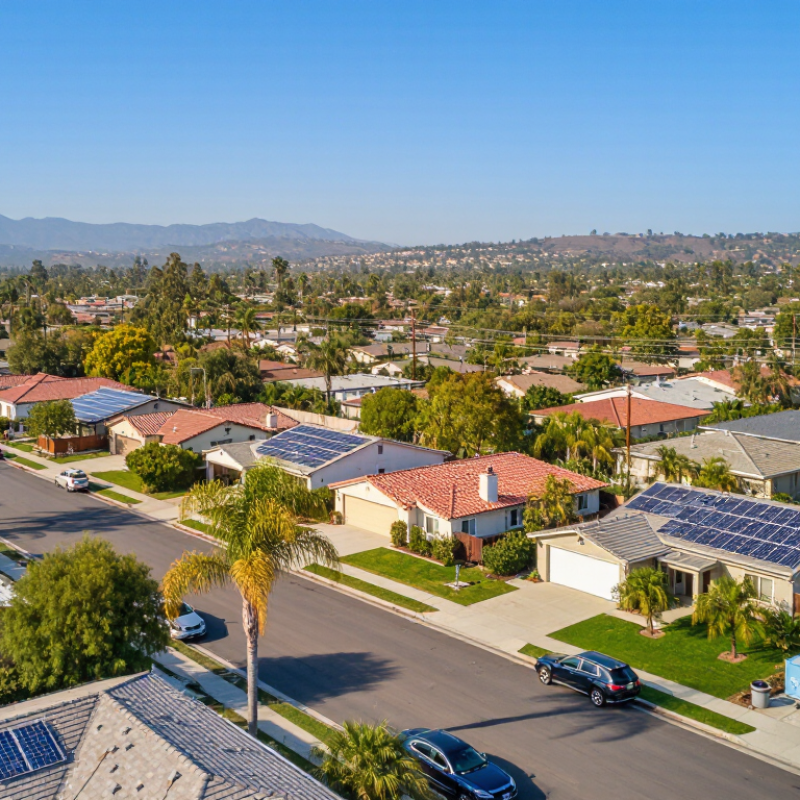
Going solar in California can mean very different things: a shaded San Diego roof, a hot Central Valley home, or a battery-backed system facing evening peak rates. The state is a major solar market, but a large market does not guarantee a good installation. Buyers still need to compare equipment, warranties, permitting experience, and the assumptions behind each savings estimate.
The Solar Energy Industries Association and Wood Mackenzie’s Solar Market Insight reports track California as one of the country’s leading solar markets. Their industry data provides useful context, but statewide growth figures cannot predict one household’s bill savings. California’s changing compensation rules also make storage options and expected electricity use important parts of a proposal. Details matter.
Bernadette Del Chiaro, executive director of the California Solar & Storage Association, is a relevant industry voice on the state’s rooftop-solar market. Her public advocacy emphasizes the role of customer-sited solar and storage in California’s energy transition. Put plainly, her position is that local solar matters—but customers should still examine the economics carefully. That distinction is easy to miss in polished sales materials. A company’s ranking is not a guarantee. This guide compares ten solar companies serving California, with attention to service coverage, product choices, customer support, and the fine print behind quoted prices. Think of it as a starting point, not a verdict; even a strong installer may not fit every roof or budget.
How Chinese Solar Companies Serve California’s Residential and Commercial Markets
Chinese solar companies can serve California homes and businesses through equipment supply, distribution, and partnerships with local installers. Their offerings may include solar modules, inverters, and battery-storage systems. The customer experience, however, depends heavily on the installer handling design, permits, installation, and after-sales support. A rooftop system in Sacramento may face different shade and cooling needs than a warehouse near Los Angeles. Details matter.
Tips: Ask who handles service calls and warranty claims. Check equipment certifications and warranty terms. Request a site-specific estimate showing expected production, system size, and any battery assumptions. Compare the installer’s schedule and support process, not just the quoted price.
For homeowners, a well-designed system should reflect roof direction, household usage, and changing electricity rates. For commercial sites, daytime demand, roof structure, and operating hours can shape project economics. Battery storage may help some customers use more self-generated power, but it adds cost and requires careful sizing. Ask for assumptions in writing. Remote monitoring is useful, though it cannot replace responsive local service. That part is easy to overlook—and sometimes the weakest link.
California Solar: Example System Sizes and Estimated Annual Generation
Illustrative planning estimates for residential and commercial solar systems. Estimates use an assumed annual yield of 1,500 kWh per installed kW; actual output varies by location, shading, orientation, and system design. These are examples, not market averages or company-specific data.
Estimation method: system size (kW) × 1,500 kWh per kW per year. NREL’s PVWatts Calculator can provide location-specific production estimates.
Ten Chinese Solar Companies to Consider for California Projects
Choosing among ten Chinese solar companies for a California project takes more than comparing panel prices. Start with the project’s actual conditions: a hot inland roof, coastal air, or limited space can lead to different equipment needs. Review independent test reports, product certifications, degradation estimates, and warranty terms. Ask who handles claims from California and how replacement parts are supplied. Details matter.
Look beyond the module. Check whether the supplier can provide consistent production records, clear installation documentation, and support for local permitting and interconnection requirements. Request references for projects with similar climates and system sizes. Then verify those references independently. A low quote may leave out shipping, inspection, or service costs. Read every line.
A shortlist of ten is only a starting point, not an endorsement. Company records and product offerings can change, and a strong factory profile does not guarantee smooth field support. I would compare written commitments against the needs of the installer and property owner, then document any unanswered questions. Some uncertainty remains. That is worth acknowledging before a long-term investment.
Comparing Product Offerings, Warranties, and Support
When comparing Chinese solar companies for a California project, check whether their product range fits your roof, not just its headline efficiency. Ask for current panel and inverter specifications, temperature performance, and compatibility details. A shaded roof in San Diego may need a different design from a wide, sunlit roof in the Central Valley. Small details matter.
Read warranty documents closely. Panel product coverage and power-output guarantees are not the same as workmanship coverage from an installer. Check who handles a claim, what proof is required, and whether shipping or labor is excluded. Keep the documents. Warranty terms can look reassuring while leaving practical gaps. The comparison is not perfectly neat.
Support deserves equal attention. Ask how quickly technical questions are answered, whether help is available in your time zone, and how replacement parts reach California. Request a sample service process, not just a promise of “global support.” Also verify that the proposed equipment suits local permitting and utility interconnection requirements with your installer. A lower quote may still make sense, but only if the documentation and service path are clear. I would want those answers in writing before signing.
How to Choose a Solar Company for a California Installation
Choosing a solar company in California means comparing more than panel prices. Ask who will inspect the roof, handle permits, install the equipment, and provide service if a component fails. Review the proposed system’s production estimate against your roof’s shade, orientation, and recent electricity bills. Lawrence Berkeley National Laboratory’s 2024 Tracking the Sun report found a median installed price of about $3.2 per watt for residential systems in its U.S. dataset for 2023. Treat that as a reference, not a California quote: roof repairs, batteries, and project design can change the price.
Tips: Request itemized quotes from at least three installers. Check current licensing and insurance, then ask for local references and the warranty terms in writing. Have each company explain its assumptions about annual output, utility export credits, and battery use. Compare estimated savings using the same assumptions. Small differences matter.
A polished proposal is not proof of a good installation. Ask to see a sample permit package and a clear project schedule. Look closely at the workmanship warranty and who handles service after installation. If an estimate promises a fixed payback but avoids discussing shade, roof age, or changing utility rates, pause. I would also ask what happens if actual production falls short; many homeowners overlook that detail.