“Free” sounds simple. The details are not. In home solar, free home solar panels often refers to a lease, power-purchase agreement, or incentive-supported offer—not equipment with no cost or obligations. Buyers should check who owns the system, what payments apply, and who handles repairs. Roof age matters, too. A low quote can leave important questions unanswered.
The market is substantial. The International Energy Agency’s Renewables 2024 report says global renewable capacity grew by nearly 510 gigawatts in 2023, with solar accounting for about three-quarters of new additions. The IEA’s 2022 Special Report on Solar PV Global Supply Chains also found that China held more than 80% of manufacturing capacity across key solar-panel production stages. IEA Executive Director Fatih Birol described solar as “the new king of electricity markets.” That context helps explain why buyers may compare Chinese suppliers, but factory scale alone cannot prove a home system is suitable. This guide examines ten suppliers through practical questions: product range, certifications, warranty terms, export experience, and support after delivery. Local installation and financing still need separate checks. A supplier list is only a starting point. Some details will remain difficult to compare, and that is worth admitting. “Free” should invite careful questions, not rushed trust.
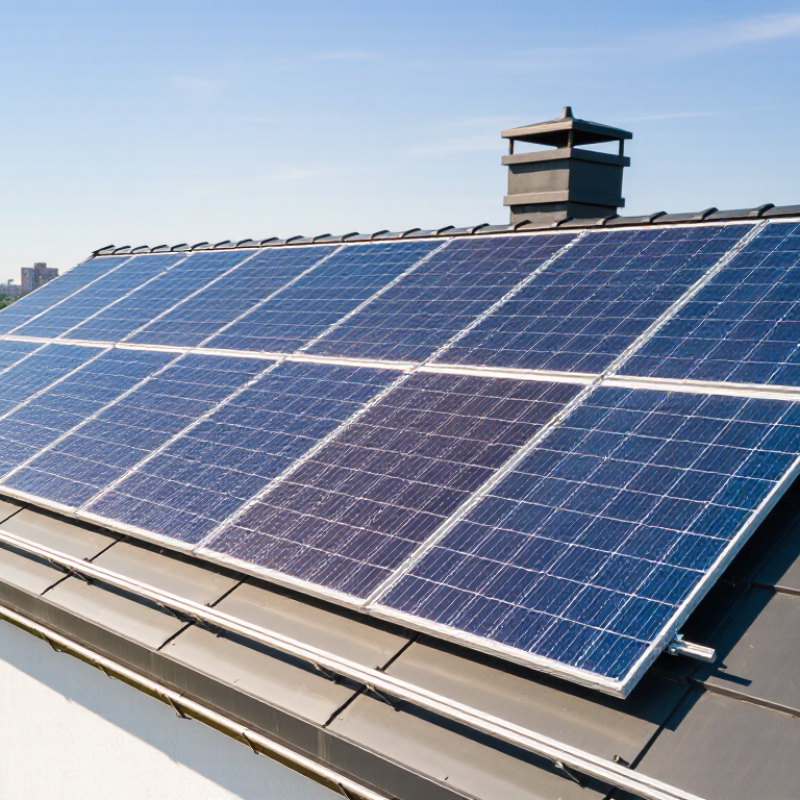
“Free” usually describes the payment plan, not the equipment. A homeowner may pay nothing upfront under a lease or power-purchase agreement, then make monthly payments or pay for the electricity produced. The provider typically owns the system, while the homeowner agrees to contract terms that may last many years. So, free today can mean committed payments tomorrow. Read the agreement carefully.
Lawrence Berkeley National Laboratory’s Tracking the Sun 2024 report found a median residential solar price of about $3.3 per watt in 2023. That benchmark helps explain why companies advertise no-upfront-cost plans: the installation still has a real cost, even when it is not paid at installation. Compare total payments, annual price increases, maintenance duties, and what happens if you sell your home. Small contract details matter.
Tips: Ask for the full payment schedule and a written estimate of expected system output. Check whether roof repairs, insurance, or equipment removal cost extra. A “free” offer may suit a household that values low upfront spending, but it is not automatically the cheapest option. Be cautious of broad savings promises; shade, weather, and electricity rates can change the results. A little skepticism helps.
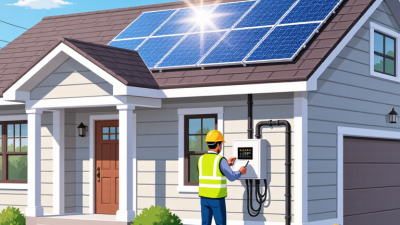
China’s residential solar supplier market is not a single storefront. It connects panel makers, component distributors, system designers, and local installation teams. Each plays a different role. A supplier may sell panels and inverters, while another plans the rooftop layout and handles installation. That distinction matters when comparing offers.
“Free” solar panels rarely mean a system has no cost. The phrase may describe a lease, a power-purchase arrangement, financing, or an incentive available in a particular market. Read the payment terms carefully. Ask who owns the equipment, who maintains it, and what happens if you move. A low upfront price can still involve long-term payments.
Good suppliers provide clear equipment specifications, performance assumptions, warranty documents, and a written scope of work. Check that the proposed system suits your roof’s orientation, shading, and electricity use. Ask for an itemized quote covering mounting hardware, wiring, installation, and monitoring. Details matter. I have seen comparisons focus on panel output while overlooking service responsibilities; that is an easy mistake. Export experience alone does not prove a supplier can support a home installation in your area. Request project references and confirm who will answer technical questions after delivery.
China Top 10 Free Home Solar Panels Suppliers?
Criteria for Comparing China’s Top 10 Home Solar Suppliers
A useful comparison starts with the same system size and usage assumptions for every supplier. Check panel output, efficiency, expected degradation, and inverter compatibility. Ask whether the quoted package includes mounting hardware, monitoring equipment, batteries, and shipping. “Free” can be an unclear label; request an itemized written quote before comparing costs. Small details matter.
Supplier reliability deserves equal attention. Review quality-control procedures, product test documents, production capacity, and stated delivery times. Ask how technical questions and warranty claims are handled, and whether support is available after shipment. Compare warranty terms carefully: coverage length alone does not explain exclusions or claim steps. Independent test reports and verifiable customer references can add useful context. Even a neat spreadsheet can miss installation or local service needs, so treat rankings as a starting point, not proof of performance.
Tips: Request matching datasheets and quotes from each supplier. Confirm shipping terms, payment milestones, and replacement procedures in writing. Check that the proposed equipment suits your roof, climate, and household load. If an answer is vague, ask again. That takes time, but it can prevent expensive surprises.
Important: Solar panels are not automatically free. A zero-upfront lease or power-purchase agreement is a financing arrangement, and may involve ongoing payments and contract conditions. Incentives and grid-export rules depend on the installation location.
| Comparison Criterion | What to Compare | Evidence to Request / Factual Note |
|---|---|---|
| 1. Product certification | Whether the exact module model has certifications accepted in the destination market. | Request current certificates and confirm the model number, issuing body, and scope. IEC 61215 covers design qualification and type approval; IEC 61730 addresses photovoltaic module safety. |
| 2. Rated power and efficiency | Module output in watts, efficiency, dimensions, and power tolerance. | Compare the datasheet for the quoted model, not just a product-family range. Rated output is measured under specified standard test conditions and is not a promise of daily household energy production. |
| 3. Energy-yield assumptions | Estimated annual generation for the home’s location, roof orientation, shading, and system design. | Ask for the calculation assumptions and loss factors. Actual output varies with weather, temperature, shading, installation angle, and system losses. |
| 4. Warranty coverage | Product warranty, performance warranty, exclusions, claim process, and who provides service. | Request the full written warranty applicable to the exact model and sales route. Warranty terms differ by product and market; check whether labor, shipping, and replacement costs are covered. |
| 5. Inverter and electrical compatibility | Inverter type, system voltage, grid compatibility, monitoring, and required electrical protections. | Confirm compatibility with local electrical and interconnection requirements. Request inverter documentation and applicable safety approvals; IEC 62109 is a safety standard for power converters used in photovoltaic systems. |
| 6. Battery and backup options | Usable battery capacity, power rating, chemistry, warranty, and backup-load capability. | Check usable—not only nominal—capacity and confirm whether backup operation requires additional equipment. A grid-tied solar system may shut down during a grid outage unless designed with approved backup capability. |
| 7. Installed and landed cost | Total cost including equipment, freight, duties, installation, permits, electrical work, and commissioning. | Compare quotes on the same system scope and currency basis. A low panel-only price is not directly comparable with a complete installed-system price. |
| 8. Supplier quality and traceability | Documented quality controls, production traceability, inspection records, and handling of defective units. | Request factory audit information, sample inspection records, serial-number traceability, and a written quality-claim procedure. ISO 9001 certification concerns a quality management system; it does not itself certify a solar module’s performance. |
| 9. Delivery and export documentation | Lead time, packaging, shipping terms, insurance, and customs documentation. | Confirm delivery terms in the contract and identify who handles freight, insurance, import duties, and damage claims. Request packing lists, commercial invoices, and product documents required by the destination country. |
| 10. Local support and financial terms | After-sales response, installer responsibilities, payment schedule, financing costs, and contract duration. | Get service commitments and all payment terms in writing. Verify local incentives and grid-export compensation with the relevant authority or utility; these vary by jurisdiction and can change over time. |
Profiles of ten leading Chinese home solar suppliers are most useful when they show what each company actually delivers. Some focus on high-volume solar modules; others combine panels with inverters, batteries, and monitoring equipment. A complete system matters. A panel alone cannot power a home without compatible components and installation.
Compare suppliers by production experience, published test data, warranty terms, and technical support. One may offer flexible system design, while another specializes in compact rooftop kits. Some provide clear export documentation and installation guides. Others leave important details vague. That is worth noticing. Ask for module output, inverter compatibility, battery capacity, and a written estimate of delivered costs before comparing offers.
“Free” panels rarely mean zero cost. Offers may involve financing, leases, or bundled installation, so check the full payment terms. Supplier profiles should also explain service after delivery: who handles faults, replacement parts, and warranty claims? I would not judge reliability from a polished product sheet alone. Verify claims with independent test records where available, and remember that roof shade, weather, and local installer skill can change real-world output.
Annual newly installed distributed solar PV capacity, 2021–2024 (GW)
China added 118.18 GW of distributed solar PV capacity in 2024. Distributed PV includes residential and commercial or industrial installations; these figures are not residential-only. Source: China National Energy Administration annual statistics.
China Top 10 Free Home Solar Panels Suppliers?
How to Verify Costs, Warranties, and Installation Terms
“Free” rarely means no cost. Read the fine print. A supplier may offer a lease or power agreement rather than panels you own. Ask for an itemized quote showing equipment, battery storage, electrical upgrades, permits, and ongoing charges. Check whether savings estimates assume ideal sunlight or include seasonal changes. A spreadsheet can still miss the cost of roof repairs, so ask who pays if the site survey finds damage.
Get warranty terms in writing. Confirm what covers panels, inverters, batteries, installation labor, and system performance. Check exclusions, claim procedures, and whether coverage transfers if you sell the home. Then review the installation contract: site-survey requirements, work schedule, roof penetrations, cleanup, system testing, and who handles service calls. Ask what happens if installation is delayed or the final design differs from the quote. Keep all answers and promises in written form. If a seller pressures you to sign before explaining payment terms, pause. I would be cautious, even if the projected savings look unusually attractive.